

Sustainability · 2025
In this section54 topics
- Sustainability Policy2 items
- Sustainability Goals & UN SDGs3 items
- Policy Review3 items
- Impacts on Stakeholders — Overview1 item
- Business Value Chain2 items
- Stakeholder Analysis2 items
- Environmental Sustainability — Overview1 item
- Environmental Policy & Guidelines4 items
- Environmental Policy Review3 items
- Energy — Plan & Guidelines2 items
- Energy — Electricity Consumption1 item
- Energy — Fuel Consumption1 item
- Energy — Targets1 item
- Energy — Performance & Outcomes2 items
- Water — Plan & Guidelines2 items
- Water — Withdrawal, Discharge & Consumption1 item
- Water — Targets2 items
- Water — Performance & Outcomes2 items
- Waste — Plan & Guidelines2 items
- Waste — Generation, Disposal & Recycling1 item
- Waste — Targets1 item
- Waste — Performance & Outcomes2 items
- GHG — Plan & Guidelines2 items
- GHG — Emissions1 item
- GHG — Emissions Verification2 items
- GHG — Principles & Standards1 item
- GHG — Targets2 items
- GHG Targets — Other Targets1 item
- GHG — Performance & Outcomes2 items
- Environmental Legal Incidents1 item
- Other Environmental Management1 item
- Social Sustainability — Overview1 item
- Social Policy & Guidelines4 items
- Social Policy Review3 items
- Social — Principles & Standards Practised1 item
- Human Rights Due Diligence2 items
- Employees — Plan & Guidelines4 items
- Employees — Workforce2 items
- Employees — Remuneration & Provident Fund2 items
- Employees — Training & Development2 items
- Employees — Occupational Health & Safety2 items
- Employees — Labour Relations2 items
- Employees — Employee Representation3 items
- Employees — Targets3 items
- Employees — Performance & Outcomes3 items
- Customers — Plan & Guidelines4 items
- Customers — Satisfaction Results1 item
- Customers — Targets3 items
- Customers — Performance & Outcomes3 items
- Community & Social — Plan & Guidelines3 items
- Community & Social — Targets3 items
- Community & Social — Performance & Outcomes2 items
- Other Social Management2 items
- Law Violation Incidents2 items
Sustainability Policy
Has a Sustainability Policy
Yes
Policy Description
3.1.1 Overview of the Sustainability Policy
The Company conducts its business under the concept of Shared Value, aiming to support business growth while contributing to social development and considering environmental impacts. This is achieved through responsible and accessible financial services that align with the needs and expectations of stakeholders throughout the value chain, including customers, business partners, employees, shareholders, and society as a whole.
The Company adopts its sustainability policy as a framework for defining strategic direction, risk management, and organizational operations, based on the principles of Environmental, Social, and Governance (ESG). This approach seeks to balance business performance with social responsibility and transparent, accountable corporate governance.
The Company’s sustainability policy is aligned with the United Nations Sustainable Development Goals (SDGs) and serves as a reference framework for developing action plans, targets, performance indicators, and monitoring mechanisms across three dimensions: Economic and Governance, Social, and Environmental. This framework supports the Company’s stable and sustainable long-term growth.
3.1.2 Sustainability Governance Structure and Roles of Relevant Committees
The Company has established a clear sustainability governance structure to ensure that sustainability considerations are integrated into the Company’s strategic direction, risk management, and business decision-making processes. Roles and responsibilities are defined across the Board of Directors, relevant subcommittees, and management to ensure that sustainability initiatives are implemented systematically, transparently, and subject to monitoring and evaluation.
Board of Directors
The Board is responsible for setting policy direction and overseeing the overall sustainability strategy to ensure alignment with the Company’s business strategy and risk management framework. The Board reviews and approves sustainability policies, goals, and operational approaches that have been screened by relevant committees, and acknowledges key developments to ensure that the Company’s business operations adhere to good corporate governance principles and create long-term value.
Nomination and Remuneration and Corporate Governance for Sustainability Committee
This committee is responsible for reviewing sustainability policies, strategies, and operational approaches before proposing them to the Board of Directors for consideration. The committee also oversees the implementation of sustainability practices to ensure alignment with good corporate governance principles, relevant standards, and regulatory guidelines. In addition, the committee acknowledges progress reports on sustainability performance at least once a year and reports key matters to the Board of Directors as appropriate.
Management
Management is responsible for translating sustainability policies and strategies into practical implementation by establishing appropriate action plans, targets, and performance indicators. Management also allocates resources, monitors performance, and reports progress as well as significant sustainability-related issues to the relevant committees to support governance oversight and strategic decision-making.
3.1.3 Sustainability Management Practices
The Company has established sustainability management practices consistent with its sustainability policy and governance structure by integrating ESG considerations into business operations, risk management, and the development of financial products. This integration ensures that sustainability initiatives can be effectively implemented in practice.
Economic and Governance Practices
The Company aims to achieve sustainable business growth within an acceptable risk framework by focusing on industries and customer segments with long-term potential. At the same time, the Company maintains prudent credit portfolio management and appropriate risk diversification.
The Company continuously develops and enhances its financial products and services through digital technologies to improve efficiency, streamline transaction processes, and enhance customer experience, while ensuring data security and managing information technology risks.
In terms of governance, the Company operates under the principles of good corporate governance through the oversight of the Board of Directors and relevant subcommittees, adherence to the Code of Conduct, implementation of anti-corruption measures, and transparent disclosure practices in order to build confidence among stakeholders.
Social Practices
The Company places importance on developing employee capabilities and improving quality of life by promoting continuous learning and skill development. The Company also ensures a safe working environment with appropriate occupational health standards and fair employee welfare practices, while respecting human rights and promoting non-discrimination.
In addition, the Company conducts corporate social responsibility (CSR) initiatives alongside its business operations to create shared value with communities and society. These initiatives include collaboration with partners, support for education and public health, and the promotion of financial literacy to enhance access to financial resources for small entrepreneurs and SMEs.
Environmental Practices
The Company implements environmental practices aimed at reducing operational impacts and improving resource efficiency. This includes transitioning operational processes toward digital platforms such as e-Factoring and online service channels, which help reduce paper usage, travel, and energy consumption.
The Company also incorporates environmental considerations into its credit assessment process in order to support environmentally responsible businesses and continuously promote environmental awareness within the organization.
Sustainability Goals & UN SDGs
Has Sustainability Goals
Yes
Goals Description
3.1.4 Sustainability Targets, Action Plans, and Performance
The Company establishes sustainability targets and action plans aligned with its corporate strategy and risk management framework. Appropriate performance indicators (KPIs) are defined to enable effective monitoring and evaluation, ensuring that sustainability initiatives deliver tangible outcomes and that progress can be transparently communicated to stakeholders.
Economic and Governance Dimension
Increase credit transaction volume by not less than 10% per year, within the Company’s acceptable risk framework.
Develop digital financial products and services such as e-Factoring and Online Factoring.
Report risk management performance to relevant committees on a quarterly basis, and conduct BCP testing at least once per year.
Maintain corporate governance standards at the “Very Good – Excellent” level.
Social Dimension
Ensure 100% of employees receive Occupational Health and Safety (OHS) training annually.
Operate in accordance with policies on human rights, equality, and non-discrimination.
Promote knowledge development in ESG, ethics, and personal data protection.
Continuously implement CSR activities and financial literacy programs for SMEs.
Environmental Dimension
Implement Digital-by-Default practices to reduce resource consumption.
Increase the value or proportion of Green Loans by at least 10% per year compared with the previous year (baseline year: 2024).
Obtain certification of Carbon Footprint for Organization (CFO) Scope 1–2 and begin collecting Scope 3 data (business travel).
Organize environmental awareness activities at least once per year.
3.1.5 Review and Monitoring of Sustainability Performance
The Company has established a systematic process for monitoring and reviewing sustainability performance to ensure that operations are aligned with the defined policies, targets, and action plans, while also responding appropriately to changes in the business environment and emerging risks.
Management is responsible for monitoring and compiling performance results based on sustainability indicators across each dimension. Progress reports, significant issues, and recommendations are prepared and presented to the Nomination and Remuneration and Corporate Governance for Sustainability Committee at least once per year.
The outcomes of these reviews are used to improve sustainability plans, targets, and practices for the following period. The process is also linked to the Company’s risk management and strategic development, while sustainability information is disclosed transparently through the 56-1 One Report and the Company’s digital communication channels.
Alignment of Sustainability Initiatives with the United Nations Sustainable Development Goals (UN SDGs)
ESG Dimension | SDG | Relevant Issues | Company’s Implementation Approach | Reference Section |
Economic & Governance | SDG 8 | Sustainable growth of SMEs and the overall economy | Support SME access to financing through factoring services and the development of financial products within an appropriate risk framework | 3.1.3, 3.1.4 |
Economic & Governance | SDG 9 | Financial innovation and digital infrastructure | Develop e-Factoring and Online Factoring, strengthen IT systems, cybersecurity, and BCP readiness | 3.1.3, 3.1.4, 3.1.5 |
Economic & Social | SDG 10 | Equal access to financial services | Reduce barriers to financing through digital channels and promote financial and digital literacy for SMEs | 3.1.3, 3.1.4 |
Environmental | SDG 12 | Efficient resource utilization | Promote Digital-by-Default operations, reduce paper usage, implement 3Rs principles, and adopt environmentally responsible procurement practices | 3.1.3, 3.1.4 |
Environmental | SDG 13 | Greenhouse gas reduction and management | Measure and manage carbon footprint (Scope 1–2 and initial Scope 3) and promote Green Loans / ESG Finance | 3.1.3, 3.1.4 |
Governance | SDG 16 | Governance, transparency, and anti-corruption | Operate under CG principles with internal control systems, risk management, whistleblowing channels, and transparent disclosure | 3.1.2, 3.1.3, 3.1.5 |
Social & Governance | SDG 17 | Partnerships with stakeholders | Collaborate with partners, communities, and educational institutions to implement CSR initiatives and promote financial and digital literacy | 3.1.3, 3.1.4 |
UN Sustainable Development Goals
| SDG Goal |
|---|
| Goal 8 Decent Work and Economic Growth |
| Goal 8 Decent Work and Economic Growth |
| Goal 9 Industry, Innovation and Infrastructure |
| Goal 9 Industry, Innovation and Infrastructure |
| Goal 10 Reduce Inequalities |
| Goal 10 Reduce Inequalities |
| Goal 12 Responsible Consumption and Production |
| Goal 12 Responsible Consumption and Production |
| Goal 13 Climate Action |
| Goal 13 Climate Action |
| Goal 16 Peace, Justice and Strong Institutions |
| Goal 16 Peace, Justice and Strong Institutions |
| Goal 17 Partnerships for the Goals |
| Goal 17 Partnerships for the Goals |
Policy Review
Policy Reviewed This Year
Yes
Policy Changed This Year
Yes
Review Details
Review of the Sustainability Policy and/or Sustainability Management Targets During the Past Year
During the past year, the Company conducted a systematic review of its sustainability policies and management targets to assess their appropriateness and alignment with the Company’s corporate strategy, business context, changes in economic conditions, significant risks, stakeholder expectations, and applicable corporate governance standards.
The review was carried out through the monitoring and evaluation process of sustainability performance across the three dimensions: Economic and Governance, Social, and Environmental. Management compiled performance results against the established plans, targets, sustainability indicators, and material ESG issues, together with relevant recommendations. These were presented to the Nomination and Remuneration and Corporate Governance for Sustainability Committee for acknowledgment and consideration at least once a year, in order to support governance oversight and policy review.
Based on the review conducted during the year, the Committee concluded that the Company’s sustainability policies and management targets remain appropriate, comprehensive, and aligned with the organization’s strategic direction. Therefore, no significant changes to the core sustainability policy were deemed necessary. The results of the review were subsequently reported to the Board of Directors in accordance with the established governance process.
Changes and Developments in the Sustainability Policy and/or Sustainability Management Targets During the Past Year
Although the Company’s sustainability policy remained substantively unchanged, the Company continued to enhance and develop its sustainability targets and implementation approaches during the year to ensure greater alignment with the business environment and to enable clearer monitoring and evaluation of performance.
Key developments during the year included:
Enhancing sustainability targets and performance indicators by making them more quantitative and closely linked to the Company’s corporate strategy and risk management framework.
Strengthening the integration of Environmental, Social, and Governance (ESG) considerations into business operations, governance processes, and business decision-making in a more systematic manner.
Incorporating recommendations from the Board and relevant committees into the development and refinement of the Company’s medium-term sustainability plans and strategies, ensuring that sustainability initiatives are clearly directed and aligned with the Company’s long-term business growth.
These developments reflect the Company’s commitment to conducting business responsibly under the principles of good corporate governance and creating sustainable value for all stakeholder groups. The Company discloses sustainability progress through the 56-1 One Report and other appropriate communication channels in a transparent and verifiable manner.
Impacts on Stakeholders — Overview
Introduction
The Company recognizes the importance of stakeholders at every stage of its business operations and places emphasis on managing potential impacts throughout the business value chain. The Company strives to create a balance between business growth, social responsibility, and good corporate governance in order to generate sustainable value for all stakeholder groups.
Given the nature of the Company’s business as a factoring service provider and financial service provider for entrepreneurs, particularly small and medium-sized enterprises (SMEs), which play an important role in the country’s economic system and supply chains, the Company interacts with a diverse range of stakeholders both within and outside the organization. The Company therefore adopts the business value chain concept as a framework for systematically identifying, analyzing, and managing potential impacts in a transparent manner and in alignment with the principles of good corporate governance.
Business Value Chain
Introduction
Business Value Chain
The Company operates a factoring and related financial services business with the objective of creating value for key stakeholders throughout the business value chain. This value chain spans upstream, midstream, and downstream activities, encompassing efficient funding management, credit services delivered under prudent risk management frameworks, and continuous customer engagement. Through these processes, the Company supports fair and transparent access to financing for SMEs while ensuring compliance with applicable laws and regulatory requirements.
The Company’s value chain reflects the relationships among stakeholders who play significant roles in governance and business operations, including shareholders, financial institutions, business partners, customers, employees, and regulatory authorities. In addition, the Company contributes positively to the broader economy by supporting liquidity and enhancing the growth potential of SME businesses.
The structure of the Company’s value chain—covering upstream, midstream, and downstream activities as well as the identification of stakeholders involved at each stage—has been developed based on the Company’s business context, operational characteristics, and its objective of delivering appropriate value to stakeholders. This framework is reviewed at the management level and reported to relevant committees to serve as a guideline for overseeing, monitoring, and advancing the Company’s sustainability initiatives.
Primary Activities
1. Funding Sourcing and Liquidity Management
The Company manages funding sources obtained from financial institutions and business partners in alignment with its business structure and risk appetite. Emphasis is placed on liquidity management and financial cost efficiency to ensure the Company’s capability to continuously and sustainably provide factoring services to customers. This area is considered an important aspect of risk management and business continuity oversight by the Board.
2. Factoring Services and Credit Operations
Midstream activities include credit application intake, credit risk analysis and assessment, credit approval, contract preparation, and ongoing credit management throughout the contract period. These processes are conducted under clearly defined and fair lending policies aligned with good governance principles, ensuring transparency and mitigating risks associated with credit services.
3. Service Delivery and Financial Transaction Management
The Company delivers financial services through secure digital platforms and financial systems. Customers are able to receive funds, track transaction status, and manage financial transactions conveniently and accurately. The Company places strong emphasis on personal data protection, cybersecurity, and compliance with applicable legal requirements.
4. Marketing, Communication, and Customer Relationship Management
The Company conducts marketing and communication activities to provide accurate, fair, and appropriate information about its financial products and services to target customers. In addition, the Company maintains ongoing customer engagement after credit services are provided through advisory services, credit line monitoring, payment reminders, and complaint and feedback channels. These measures are designed to enhance service quality and maintain long-term customer relationships.
Support Activities
In addition to the primary activities, the Company undertakes supporting activities that enable the value chain to operate effectively, including:
Partner management and procurement, through the selection of suppliers and service providers that meet transparent and ethical standards aligned with good governance principles
Technology and information systems development, including cybersecurity management and personal data protection
Human resource management, aimed at developing employees’ capabilities, knowledge, and ethical standards in alignment with the Company’s business operations
Corporate infrastructure and organizational management, including accounting, finance, enterprise risk management, and corporate governance systems, which form the foundation of sustainable business operations
The Company’s value chain is designed to systematically connect business activities and stakeholders to enhance the value of its financial services. This framework supports business growth while maintaining effective risk management, transparency, and social responsibility over the long term.
Value Chain Description
Overview of Business Value Chain Activities
The Company operates a factoring business and related financial services for entrepreneurs, particularly small and medium-sized enterprises (SMEs), which play an important role in the country’s economic system and supply chains. The Company therefore places importance on managing business activities throughout the entire value chain, covering upstream, midstream, and downstream processes, to ensure that operations are conducted efficiently, transparently, and in accordance with the principles of good corporate governance.
The Company’s business value chain can be divided into three main stages:
Upstream Activities – covering governance, funding sourcing, and supporting systems that are essential to the Company’s business operations.
Core Business (Midstream Activities) – representing the Company’s primary operations, including the provision of factoring services, credit risk management, and loan portfolio management.
Downstream Activities – relating to the outcomes of business operations, relationship management, and the impacts on external stakeholders.
The Company utilizes this value chain structure as a framework to identify stakeholders, assess potential impacts, and determine appropriate management approaches at each stage of operations. This approach supports sustainable business growth while balancing social responsibility and long-term sustainability.
Stakeholder Analysis
Introduction
The Company has conducted an analysis of stakeholders across the business value chain by considering the linkages between key activities at each stage of the value chain—upstream, midstream, and downstream—and the relevant stakeholder groups. This process enables the Company to appropriately and systematically identify stakeholder expectations, key impact issues, and suitable response approaches.
The analysis covers both internal and external stakeholders, taking into account their level of influence on the Company’s business operations, potential risks and opportunities, as well as expectations in the economic, social, and governance dimensions. This ensures that stakeholder relationship management aligns with the Company’s corporate strategy, risk management framework, and sustainability objectives.
The results of this analysis are used as a basis for determining appropriate response strategies, designing engagement channels, and continuously monitoring stakeholder-related issues for each stakeholder group. The details of the stakeholder analysis within the business value chain are presented in the table below.
Stakeholder Analysis
| Stakeholder Type | Stakeholders | Stakeholder Expectations | Response to Expectations | Communication Activities |
|---|---|---|---|---|
| Internal stakeholders | 2897 · Description: Board of director | • Acknowledgment and understanding of the organization's policies, business directions, and operational approaches.
• Opportunities for professional development, skill enhancement, and career growth within the organization.
• Fair and competitive compensation and benefits packages that align with industry standards.
• A supportive system that promotes work-life balance, enabling employees to maintain a healthy equilibrium between their professional and personal lives.
• Comprehensive care and support in areas such as health, safety, and job security, ensuring the well-being and stability of employees.
• A management approach that prioritizes human rights, equality, and fair opportunities for all individuals within the organization. | 1. Enhance organizational structure and career paths.
The company refined its structure to boost efficiency, foster collaboration, and implement KPI-based evaluations. It also developed career paths, talent programs, and succession planning to cultivate future leaders.
2. Improve compensation and benefits.
The company established competitive packages using KPI-based evaluations, adjusting salaries and bonuses, benchmarking against industry standards, and enhancing benefits like health insurance and provident funds.
3. Promote workplace health and safety.
The company conducted annual health check-ups, promoted exercise programs, and held fire drills to ensure well-being and emergency preparedness.
4. Encourage work-life balance.
The company supported flexible work arrangements (Work From Home, Work From Anywhere) and flexible hours to improve efficiency and reduce stress.
5. Develop a succession plan.
The company created a Successor Development Plan with leadership programs, job rotation, and mentorship to prepare individuals for key roles and ensure continuity.
| 2941 · Description: Online Communication · 2942 · Description: Internal Meeting · 2945 · Description: Complaint Reception · 2948 · Description: Training / Seminar |
| External stakeholders | 2913 · Description: Shareholders | • Sustainable business operations with the ability to generate long-term returns
• Payment of appropriate and consistent dividends
• Transparent, fair, and auditable business operations
• Shareholders receive accurate, complete, and timely information to support investment decisions | 1. Provide shareholders with appropriate returns based on company performance, profitability, and dividend policy.
2. Disclose accurate, adequate, and timely information via the Annual Report, 56-1 One Report, company website, and SET filings, ensuring equal access to material information.
3. Conduct business per Good Corporate Governance (CG) principles, emphasizing transparency, fairness, accountability, risk management, and social responsibility.
4. Hold Annual General Meetings (AGM) consistently, allowing shareholders to express opinions, raise questions, and propose business directions to reflect their perspectives.
5. Support proactive shareholder communication through quarterly meetings, Investor Relations Reports, and Opportunity Day participation to build confidence in company growth.
6. Strictly comply with SET and SEC regulations to ensure business operations align with established standards.
| 2939 · Description: Press Release · 2941 · Description: Online Communication · 2944 · Description: Annual General Meeting (AGM) · 2945 · Description: Complaint Reception |
| External stakeholders | 2898 · Description: Competitors | • Conduct business and competition fairly, transparently, and ethically.
• Exchange constructive ideas to support mutual industry development.
• Respect trade regulations and fair competition standards.
• Develop business potential to create a competitive environment that promotes overall industry growth. | 1. Adhere to Fair Competition Principles: Conduct business ethically within trade regulations, avoiding unfair methods for competitive advantage. Respect competitors' rights and refrain from misappropriating trade secrets.
2. Maintain Ethical Business Standards: Avoid distorting or disseminating misleading information about competitors. Comply with fair competition laws and regulatory guidelines on business information protection.
3. Foster Industry Collaboration: Exchange constructive ideas with competitors via business associations or trade forums. Cooperate in developing industry standards to ensure transparency and mutual benefit.
4. Prevent Monopolies & Promote Market Fairness: Support free competition without unjustified barriers. Follow regulatory guidelines and fair competition laws to maintain market balance and equal opportunities.
| 2943 · Description: External Meeting · 2949 · Other name: Participate in meetings of factoring associations and forums to exchange ideas, track industry trends, and enhance business conduct standards. · Description: Others |
| External stakeholders | 2894 · Description: Creditor · 2899 · Description: Suppliers · 2900 · Description: Business partners · 2925 · Description: Financial institution | • Select suppliers transparently and fairly, using clear and verifiable criteria.
• Treat all business partners equally and without discrimination.
• Strictly adhere to the terms and conditions stipulated in the contract to build trust and sustainable business relationships.
• Uphold the principles of good governance and transparency, ensuring no corruption or conflict of interest in the procurement process.
• Ensure partners receive agreed-upon compensation within the specified timeframe to facilitate stable business operations. | 1. Establish Transparent Policies & Practices: Implement a Procurement Policy outlining scope, criteria, and processes to ensure standardization, transparency, and accountability. Adhere to Good Corporate Governance, promoting fairness and equality with all partners. Provide clear, accurate, and transparent business communication to support informed decision-making.
2. Strengthen Business Relationships: Organize meetings to foster relationships, exchange ideas, and explore joint business opportunities. Collaborate with affiliates to expand market reach and support new ventures.
3. Ensure Compliance with Trade & Bank Regulations: Operate per trade agreements to build long-term trust. Honor agreements with banks and trade creditors, ensuring alignment with business plans and liquidity.
4. Maintain Financial Discipline: Pay interest and repay loans on schedule to uphold financial credibility and strong creditor relationships.
| 2939 · Description: Press Release · 2943 · Description: External Meeting · 2944 · Description: Annual General Meeting (AGM) · 2945 · Description: Complaint Reception |
| External stakeholders | 2923 · Description: Customers · 2936 · Other name: Trade receivables · Description: Others | • Receive accurate, complete, and timely information about the company's products and services.
• Access products and services easily, conveniently, and quickly, with reasonable prices.
• Have a system to ensure the security of customer information, confidentiality, and privacy.
• Receive transparent, fair, and equal services. | 1. Transparent and Fair Communication
• Establish fair, clear, and easy-to-understand contracts and terms of service.
• Provide accurate, complete, and unbiased information about products and services.
2. Confidentiality and Personal Data Protection
• Maintain strict confidentiality of customer and debtor information.
• Refrain from disclosing information to third parties unless consent is obtained from the customer or as required by law.
3. Quality Customer-Centric Service
• Provide advice on products and services with the customer's best interests in mind.
• Deliver prompt and efficient services to support the business agility of customers and debtors.
4. Technological Advancement and Service Accessibility
• Develop and enhance the efficiency of digital systems, enabling customers to access products and services with ease and convenience.
• Leverage digital technology to enhance service delivery and meet customer needs in the digital age.
5. Risk Management and Fraud Prevention
• Implement a rigorous and systematic approach to credit risk management.
• Establish measures to prevent business crimes and financial fraud.
6. Fair and Equal Service Provision
• Conduct business with integrity and provide fair services to all customer groups.
• Maintain equal service standards for all customers.
7. Customer Satisfaction Survey
• Conduct a satisfaction survey of a sample group of 500 customers to assess quality in three key areas:
• Product Factoring - Product suitability, usability, and value.
• Service Delivery - Convenience, speed, and efficiency of service.
• Trustworthiness - Customer confidence in using the company's services. | 2938 · Description: Visit · 2941 · Description: Online Communication · 2945 · Description: Complaint Reception |
| External stakeholders | 2931 · Description: Government agencies and Regulators | • Business operations comply with relevant laws, regulations, and rules.
• Transparency, verifiability, and good governance standards.
• Effective and auditable risk management system.
• Promotion of Corporate Governance and responsible business practices. | 1. Compliance with Laws & Regulations
• Establish policies and SOPs aligned with relevant laws.
• Maintain Compliance and Internal Audit Departments to monitor adherence.
• Provide ongoing employee training on regulations and requirements.
2. Risk Management & Internal Audit
• Implement risk management to mitigate operational risks and legal violations.
• Conduct periodic internal audits to ensure compliance with standards.
3. Transparency & Auditability
• Disclose key company information to regulators and stakeholders accurately.
• Maintain a traceable document and data storage system.
4. Communication & Collaboration with Regulators
• Engage regularly with regulators via the Compliance Department to align with evolving requirements.
• Participate in audits, policy meetings, and regulatory seminars.
• Collaborate with government agencies on industry regulations.
| 2941 · Description: Online Communication · 2943 · Description: External Meeting |
| External stakeholders | 2936 · Other name: Society and Environment · Description: Others | • The Company conducts its business with integrity, transparency, and good corporate governance.
• The Company supports the improvement of the quality of life of communities and society.
• The Company plays a role in promoting social initiatives and participating in community development activities.
| 1. Responsible and Transparent Business Operations
• Adhering to Corporate Governance principles and anti-corruption practices, including participation in the Thai Private Sector Collective Action Against Corruption (CAC).
• Supporting and providing financing to businesses that operate with social and environmental responsibility (Sustainable Finance).
• Building collaboration with public and private sector organizations to support projects that promote sustainability.
2. Social and Community Development
• Supporting SMEs and local businesses in gaining access to financial resources to strengthen the grassroots economy.
• Implementing various corporate social responsibility (CSR) initiatives, such as:
o The CSR Outing “Green Tourism” project at Bang Kobua, Samut Prakan, which promotes low-carbon tourism and community development.
o Donations of funds and essential supplies to schools, hospitals, and underprivileged communities.
o Organizing volunteer activities that encourage employee participation in social support initiatives.
| 2940 · Description: Social Event · 2941 · Description: Online Communication |
| External stakeholders | 2936 · Other name: Environment and Natural Resources · Description: Others | Conduct business with consideration for environmental impacts and contribute to the conservation of natural resources. | Environmental Protection and Conservation Initiatives
1. “Care the Wild – Plant & Protect” Reforestation Project
The Company collaborated with the Stock Exchange of Thailand (SET) and the Market for Alternative Investment Listed Companies Association (maiA) to plant trees on an area of 91 rai at Ban Oi and Ban Boonreng Community Forests, Rong Kwang District, Phrae Province. The project supports the “Plant & Protect” concept to increase green spaces, restore ecosystems, and enhance carbon absorption capacity.
2. Greenhouse Gas Reduction (Carbon Reduction)
The Company supports Low Carbon Tourism through CSR activities, such as environmentally friendly travel and waste reduction initiatives in tourist destinations. In addition, the Company promotes energy-saving measures within the organization, including the use of LED lighting and energy-efficient electrical appliances.
3. Paperless Policy and Resource Reduction
The Company implements E-Document and e-Factoring systems to reduce paper consumption in business processes. Employees are encouraged to follow the “Think Before Print” principle and to use recycled paper where appropriate, supporting efficient resource management and environmental sustainability.
| 2948 · Description: Training / Seminar · 2949 · Other name: Participate in environmental conservation activities. · Description: Others |
| Internal stakeholders | 2921 · Description: Employees | • Job security, career growth opportunities, and capability development
• Fair compensation and employee benefits
• Health, safety, and work–life balance
• Equality and respect for human rights
| • Development of organizational structure, career paths, and succession planning
• KPI-based performance evaluation system and performance-based compensation
• Occupational Health and Safety (OHS) training, annual health check-ups, and fire evacuation drills
• Work-from-Home (WFH) policy and flexible working arrangements
| 2941 · Description: Online Communication · 2942 · Description: Internal Meeting · 2945 · Description: Complaint Reception · 2948 · Description: Training / Seminar |
| External stakeholders | 2936 · Other name: Media · Description: Others | Accurate and transparent information
| Communicate information responsibly and factually.
| 2939 · Description: Press Release · 2941 · Description: Online Communication |
Environmental Sustainability — Overview
Operating Results — Introduction
Environmental Performance
In 2025, the Company implemented environmental initiatives in accordance with its established policies and practices, with the objective of reducing environmental impacts arising from its operations. As the Company primarily operates a financial services business conducted through office-based operations and digital systems, emphasis has been placed on efficient resource utilization, waste reduction, greenhouse gas management, employee awareness, and the promotion of environmentally friendly financial products. Key environmental performance outcomes are summarized as follows:
1. Resource Reduction and Waste Management
Targets
Reduce paper consumption and operational waste
Promote waste separation and recycling within the organization
Performance in 2025
The Company continued to develop digital working processes, including the e-Factoring system, electronic document management, and online communications, which have significantly reduced paper usage and office materials. In parallel, the Company implemented waste separation measures and encouraged the reuse of materials in line with the 3Rs principle (Reduce, Reuse, Recycle).
In 2025, the Company separated recyclable waste totaling 691 kilograms, generating THB 1,531 in value. Details are as follows:
Black-and-white paper: 345 kilograms, valued at THB 1,035
Cardboard boxes: 80 kilograms, valued at THB 80
Plastic bottles: 75 kilograms, valued at THB 225
Shredded paper and envelopes: 191 kilograms, valued at THB 191
In addition, the Company promoted waste separation through internal communications and encouraged the reduction of waste generated from coffee grounds through internal email campaigns. Employees were encouraged to reuse coffee grounds as organic fertilizer or odor-absorbing materials rather than disposing of them as waste. This initiative supports the Company’s Zero Waste concept on an ongoing basis.
Proceeds from the sale of recyclable materials were awarded to the Company's cleaning staff as an incentive, promoting employee participation and encouraging sustainable waste management practices within the organization.
2. Energy and Resource Efficiency
Targets
Monitor and assess energy consumption trends annually
Reduce energy and fuel consumption from internal operations
Performance in 2025
The Company continued to implement energy efficiency measures, using 2024 as the baseline year to monitor trends in energy and fuel consumption. Digital systems and online meetings were promoted to reduce unnecessary travel. Employees were also encouraged to switch off lights and electrical equipment after use and to utilize energy-efficient equipment within the office.
Quantitative performance in 2025 indicates that the Company consumed 8,972 liters of gasoline, reduced from 9,150 liters in 2024. Electricity consumption totaled 24,284 kilowatt-hours, decreasing from 28,707 kilowatt-hours in 2024.
These results reflect improved resource efficiency and provide an important foundation for further energy efficiency initiatives in the future.
3. Greenhouse Gas Management
Targets
Use 2024 as the baseline year
Review trends and develop quantitative targets for 2025–2026
Expand assessment coverage to Scope 1, Scope 2, and Scope 3
Performance in 2025
The Company strengthened its greenhouse gas management through the preparation of the Organization Carbon Footprint report based on 2024 baseline data, covering Scope 1 and Scope 2 emissions. The report was verified by an independent verifier registered and certified by the Thailand Greenhouse Gas Management Organization (Public Organization), ensuring transparency and credibility of disclosed information.
In 2025, the Company began collecting greenhouse gas emission data covering Scope 1, Scope 2, and Scope 3, to support the development of emission reduction targets and to expand the scope of environmental reporting more comprehensively in 2026, using 2025 as the assessment base year.
In terms of awareness and capacity building, the Company organized training and knowledge-sharing activities on Carbon Footprint management for executives and relevant employees. These sessions covered Scope 1 and Scope 2 principles, data collection methodologies, and the linkage between emissions management and the Company’s operations.
Participation in environmental training activities accounted for no less than 80% of total employees, with signed attendance records maintained as evidence.
Quantitative results show that Scope 1 and Scope 2 greenhouse gas emissions decreased from 41.2 tons of carbon dioxide equivalent per year in the 2024 baseline year to 37 tons of carbon dioxide equivalent in 2025. This reduction reflects improved efficiency in energy and fuel consumption. At the same time, the Company has begun collecting Scope 3 emission data to enhance climate impact management across its business value chain.
4. Promotion of Environmentally Friendly Financial Products (Green Finance)
Target
Increase the proportion of Green Finance by no less than 10% per year
Performance in 2025
The Company continued to support lending under Green Project financing, with the following loan values:
2023: THB 415 million
2024: THB 778 million
2025: THB 865 million
In 2025, Green Project lending increased by THB 87.27 million from 2024, representing a growth rate of approximately 11.2%, which exceeds the target of at least 10% annual growth.
This trend reflects the Company’s continued efforts to integrate Green Finance into its business strategy and to support environmentally responsible activities among customers within the business value chain.
5. Environmental Engagement, Awareness, and Continuous Development
Targets
The Company aims to promote employee participation and environmental learning in order to foster an environmentally responsible organizational culture and support the concept of a Low Carbon Organization, with key targets as follows:
Organize at least one environmental activity per year
Encourage employee participation in environmental learning or activities of no less than 50% of total employees
Enhance awareness and organizational culture regarding greenhouse gas reduction and efficient resource utilization
Implementation Approach
The Company promotes environmental participation and sustainability knowledge among personnel at all levels through training, activities, and internal communication channels. These initiatives enable employees to apply environmental concepts both in their professional responsibilities and daily lives.
Environmental education is delivered across multiple organizational levels:
Board of Directors and Senior Executives
Receive ESG-related training and sustainability updates to support policy direction, governance oversight, and the advancement of sustainability initiatives within the organization.
Executives and Relevant Employees
Participate in training on Carbon Footprint data management to support systematic greenhouse gas data collection and management.
Employees
Environmental learning is promoted through ESG knowledge-sharing sessions, particularly on Carbon Footprint management, including greenhouse gas emissions, environmental data collection, and operational impact reduction. Information is communicated through internal channels such as the Company intranet and internal activities, encouraging employee engagement in environmental initiatives.
Performance in 2025
In 2025, the Company organized environmental activities and learning initiatives aimed at fostering environmental awareness and employee participation. Key activities included:
Mangrove reforestation activities to restore coastal ecosystems
Low Carbon Tourism learning programs
“Save Earth – Protect Dugongs” campaign promoting reduced plastic bag usage and encouraging reusable bags
Promotion of Zero Waste practices, including the reuse of coffee grounds
In addition, on 20 September 2025, AIRA Factoring Public Company Limited organized an environmental field learning activity at Baan Mai Chai Len, Khlong Khon, Samut Songkhram Province, where executives and employees participated in mangrove seedling planting to help restore natural ecosystems and raise awareness of environmental conservation.
A total of 44 employees participated, out of 88 employees, representing 50% of total employees. Participants signed attendance records as evidence of participation and acknowledgment of environmental awareness activities.
This initiative reflects the Company’s commitment to promoting environmental knowledge while encouraging employee participation, in alignment with the Company’s environmental policy and sustainable business practices.
Environmental Policy & Guidelines
Introduction
The Company recognizes its environmental responsibility as a financial service provider and conducts its business under a governance framework that complies with applicable environmental laws, regulations, and requirements, as well as sustainability practices aligned with the business strategies of the Company and its subsidiaries.
Given the nature of the Company’s factoring business, which primarily operates through office-based activities and digital systems, the Company’s direct environmental impact is relatively limited. However, the Company acknowledges the potential indirect environmental impacts that may arise through financing support and its business value chain. Therefore, environmental considerations have been integrated as one of the Company’s material sustainability topics.
The Company has established environmental guidelines and practices as part of its organizational management, risk management, and daily business operations. These initiatives aim to improve resource efficiency, reduce negative environmental impacts, and support long-term sustainable growth. In addition, the Company is in the process of further developing clearer environmental targets and performance indicators to strengthen the systematic management of environmental issues.
Has an Environmental Policy
Yes
Policy Description
Environmental Practices of the Company
The Company integrates environmental considerations into its business operations throughout the value chain, focusing on efficient resource utilization, greenhouse gas reduction, and the promotion of environmentally responsible financial activities. Key environmental practices include the following:
1. Efficient Management of Energy, Fuel, and Resources
The Company operates in a building that has received LEED Gold certification, designed to enhance energy efficiency. The building utilizes glass structures that allow greater natural lighting, reducing electricity consumption for lighting. In addition, LED lighting systems and automatic lighting controls are installed throughout the office.
The Company regularly maintains and inspects electrical equipment to minimize unnecessary energy consumption. Corporate vehicle usage is also managed appropriately to reduce fuel consumption and carbon dioxide emissions associated with operational activities.
2. Reduction of Resource Consumption and Waste from Operations
The Company has developed a digital document management process for financial transaction documentation, replacing traditional paper-based submission by customers. This includes the use of e-Factoring systems, electronic document storage, and internal communication through digital platforms to reduce paper usage, minimize waste, and improve service efficiency.
Furthermore, the Company follows the 3Rs principle (Reduce, Reuse, Recycle) by promoting waste segregation and ensuring that hazardous waste is handled and disposed of by qualified external specialists in a safe and appropriate manner.
3. Greenhouse Gas Management and Climate Change
The Company monitors and reports greenhouse gas emissions covering Scope 1, Scope 2, and Scope 3, in accordance with internationally recognized guidelines. These emissions data have been verified by the Thailand Greenhouse Gas Management Organization (Public Organization) (TGO) to enhance the credibility and transparency of the disclosed information.
The Company implements measures to reduce greenhouse gas emissions from its operations, such as minimizing unnecessary travel through the use of online meeting systems, improving office energy efficiency, and supporting carbon offset initiatives, including reforestation projects and carbon credit mechanisms where appropriate.
4. Promotion of Environmentally Friendly Financial Products
The Company develops financial products that support greenhouse gas reduction, including Green Finance, to promote environmentally responsible activities among customers and support the transition toward a low-carbon economy.
5. Environmentally Responsible Procurement
The Company supports the procurement of products and services that consider environmental impacts by referencing recognized environmental standards such as Green Label certification or ISO 14001. The Company also selects suppliers and business partners that operate in accordance with environmental standards and promotes efficient resource utilization and the reduction of consumable materials.
6. Biodiversity Conservation and Environmental Participation
Although the Company’s business operations do not directly impact ecosystems, the Company supports environmental conservation initiatives, such as tree planting and environmental CSR activities involving employees and local communities. These initiatives aim to raise awareness and encourage participation in sustainability efforts.
The Company also promotes environmental awareness among employees through internal communication and sustainability activities, fostering an organizational culture that emphasizes environmental responsibility.
Environmental Targets and Strategic Direction
The Company establishes environmental targets and directions aligned with its corporate strategy and climate risk management framework to enhance operational efficiency, transparency, and performance monitoring. Key areas include:
1. Greenhouse Gas Reduction and Management
The Company has designated 2024 as the baseline year for monitoring greenhouse gas emissions covering Scope 1, Scope 2, and Scope 3, based on verified data from the Thailand Greenhouse Gas Management Organization (TGO). The Company plans to review emission trends and reduction measures during 2025 and 2026 in order to develop appropriate quantitative targets in subsequent periods.
2. Environmental Governance and Monitoring
The Sustainability Subcommittee oversees and monitors greenhouse gas emissions and other key environmental issues, reporting progress to management meetings at least once per year. This ensures that environmental initiatives remain aligned with strategic directions and that climate-related risks are appropriately managed.
3. Increasing the Proportion of Green Finance
The Company aims to increase the proportion of environmentally friendly financial products or green financing by at least 10% per year, supporting the transition toward a low-carbon economy and reducing environmental impacts throughout the business value chain.
4. Improving Resource and Energy Efficiency
The Company continuously seeks to reduce energy and resource consumption within its operations. 2024 is used as the baseline year for monitoring data, and annual assessments of energy and fuel consumption trends are conducted to identify opportunities to improve building efficiency, electrical systems, and fuel usage.
5. Expansion of Digital Operations
The Company aims to increase the proportion of digital financial services, including e-Factoring systems and electronic document management, to reduce paper usage, minimize waste, and enhance operational efficiency. The proportion of digital transactions is monitored as a key performance indicator.
6. Development of Monitoring and Disclosure Systems
The Company seeks to strengthen systems for monitoring, evaluating, and disclosing environmental data in a systematic, transparent, and verifiable manner. Environmental data, including energy consumption, greenhouse gas emissions, and Green Finance activities, are integrated into the Company’s annual reporting and communication channels.
7. Environmental Engagement and Continuous Improvement
The Company has established targets to promote environmental participation both internally and with stakeholders, including:
Organizing at least one environmental activity per year
Encouraging participation from at least 50% of employees
Promoting environmental awareness and low-carbon practices as part of the Company’s organizational culture
The Company aims to ensure that environmental initiatives go beyond traditional CSR activities and become a mechanism for building an organizational culture that prioritizes environmental responsibility, while supporting long-term greenhouse gas reduction goals.
Environmental Guidelines
| Guideline | Other — Please Specify |
|---|---|
| Fuel Management | |
| Renewable/Clean Energy Management | |
| Waste Management | |
| Biodiversity Management | |
| Greenhouse Gas and Climate Change Management | |
| Others | Environmental Awareness and Participation |
Environmental Policy Review
Policy Reviewed This Year
Yes
Review Details
In 2025, the Company reviewed and enhanced its environmental policies, practices, and targets, building upon initiatives first introduced in 2024. These improvements were aimed at establishing clearer structures, strengthening systematic implementation, and enabling continuous monitoring and evaluation. Key developments are summarized as follows:
1. Enhancement of Greenhouse Gas Management and Establishment of a Baseline Year
In 2025, the Company prepared its organizational greenhouse gas emissions report for the first time, using 2024 as the baseline year, covering emissions under Scope 1 and Scope 2.
The Company arranged for the emissions data to be verified by an independent verifier registered and certified by the Thailand Greenhouse Gas Management Organization (Public Organization) (TGO) in order to enhance the accuracy, transparency, and credibility of the disclosed information.
The establishment of this baseline enables the Company to systematically track trends in greenhouse gas emissions, energy consumption, and fuel usage, and to support the development of quantitative reduction targets in the future. For example, each department has been assigned to collect data on electricity consumption, fuel usage, and emission-related activities within their operations for use in preparing the Carbon Footprint report.
The Company also organized training sessions for executives and relevant employees on Scope 1 and Scope 2 principles and proper data collection practices. In addition, the Company plans to expand the scope of emissions reporting in 2026, using 2025 data, to cover Scope 1, Scope 2, and Scope 3 emissions, thereby strengthening its climate risk management framework.
2. Establishment of Quantitative Targets for Green Finance
Previously, the Company supported environmentally related projects under Green Project initiatives as a policy guideline. In 2025, the Company established a clear quantitative target by aiming to increase the proportion of environmentally friendly financial products (Green Finance) by at least 10% per year.
This target reflects the Company’s transition from a policy-based approach to a measurable performance-based approach, linking environmental finance initiatives with the Company’s strategy for sustainable and high-quality growth under the ESG framework.
3. Review of Energy and Resource Utilization Practices
The Company reviewed its energy and resource management practices, linking the expansion of digital operations—such as e-Factoring systems and electronic document management—with its objectives to reduce paper consumption, minimize waste, and reduce unnecessary travel.
At the same time, the Company established a mechanism to monitor energy and fuel consumption data on an annual basis, using 2024 as the baseline year, in order to identify improvement measures and continuously enhance operational efficiency.
4. Strengthening Environmental Governance Mechanisms
In 2025, the Company enhanced its environmental governance framework by assigning the Sustainability Subcommittee the responsibility to oversee and monitor greenhouse gas emissions management and key environmental issues.
The Subcommittee reports progress to management meetings at least once per year, ensuring that environmental performance and climate-related risks are monitored systematically. This mechanism represents a transition from operational-level environmental management to structured governance-level oversight.
Policies & Guidelines Changed
| Change | Other — Please Specify |
|---|---|
| Fuel Management | |
| Renewable/Clean Energy Management | |
| Waste Management | |
| Biodiversity Management | |
| Greenhouse Gas and Climate Change Management | |
| Other | Environmental Awareness and Participation |
Energy — Plan & Guidelines
Has an Energy Management Plan
Yes
Plan Description
Energy and Resource Efficiency Management Plan
The Company continuously implements energy and resource management initiatives aimed at reducing resource consumption, minimizing environmental impacts from business operations, and supporting digital operations in alignment with the Company’s financial services business model. These initiatives are overseen by the Sustainability Subcommittee, with progress regularly reported to management. Key approaches are summarized as follows:
1. Development of Digital Financial Transaction Systems
Targets
Reduce paper consumption
Reduce customer travel
Reduce energy and resource usage from operational processes
Implementation Approach
Continue utilizing the e-Factoring system for financial transactions, which reduces the use of paper documents and enhances service efficiency
Encourage customers to use digital channels for transactions and coordination
Monitoring and Evaluation
The Company regularly monitors the proportion of digital transactions and uses the data to assess trends in paper reduction and indirect energy-related impacts.
2. Installation and Use of Energy-Efficient Equipment in the Office
Targets
Improve electricity consumption efficiency
Reduce unnecessary energy usage within the office
Implementation Approach
Install LED lighting throughout the office to reduce electricity consumption
Encourage employees to switch off lights and electronic equipment after use
Monitoring and Evaluation
Electricity consumption data is monitored annually, using 2024 as the baseline year for trend comparison. The information is also used in the preparation of the Company’s organizational Carbon Footprint report (Scope 2).
3. Efficient Utilization of Building Resources and Energy
Targets
Reduce reliance on artificial lighting during daytime
Improve the efficient use of building resources
Implementation Approach
Utilize natural daylight within the office building to reduce electricity consumption
Support office design and workspace utilization concepts that promote energy efficiency
Monitoring and Evaluation
Energy consumption data is recorded and analyzed annually to determine trends and support the development of improvement measures for subsequent years.
4. Regular Maintenance and Inspection of Electrical Equipment
Targets
Prevent unnecessary energy loss
Extend the lifespan of electrical equipment
Implementation Approach
Establish regular inspection and maintenance schedules for electrical and office equipment
Monitoring and Evaluation
Equipment efficiency is periodically assessed, and energy management measures are reviewed annually to improve operational efficiency.
5. Vehicle Usage Management to Reduce Greenhouse Gas Emissions
Targets
Reduce fuel consumption
Reduce greenhouse gas emissions from travel activities (Scope 1)
Implementation Approach
Use hybrid vehicles as the Company’s central transportation vehicles
Promote online meetings as an alternative to business travel where feasible
Encourage proper travel planning to reduce fuel consumption
Monitoring and Evaluation
The Company monitors and reports hybrid vehicle usage data on a monthly basis to management meetings to assess fuel efficiency, usage trends, and greenhouse gas emission impacts. This data is used to support the Company’s energy management and organizational greenhouse gas emissions reporting.
Governance and Review
The Company’s energy and resource management plan is overseen by the Sustainability Subcommittee, with performance results reported to management at least once per year. Monitoring results are reviewed to continuously improve energy efficiency measures.
Data on electricity consumption, fuel usage, and travel activities are incorporated into the preparation of the organizational greenhouse gas emissions report and linked to the Company’s long-term greenhouse gas reduction objectives.
Energy — Electricity Consumption
Electricity Consumption
| Metric | Current Year | Previous Year | Two Years Ago |
|---|---|---|---|
| Total electricity consumption within the organization (Kilowatt-Hours) | 24,284 | 28,707 | 0 |
| Electricity purchased for consumption from non-renewable energy sources (Kilowatt-Hours) | 24,284 | 28,707 | |
| Electricity purchased or generated for consumption from renewable energy sources (Kilowatt-Hours) |
Energy — Fuel Consumption
Fuel Consumption
| Metric | Current Year | Previous Year |
|---|---|---|
| Crude oil (Barrels) | ||
| Coal (Metric tonnes) | ||
| Jet fuel (Litres) | ||
| Diesel (Litres) | ||
| Gasoline (Litres) | 8,972 | 9,150 |
| Fuel oil (Litres) | ||
| Natural gas (Standard cubic feet) | ||
| LPG (Kilograms) | ||
| Steam (Metric tonnes) |
Energy — Targets
Has Set Targets
No
Energy — Performance & Outcomes
Has Performance Results
Yes
Performance Description
Energy Management and Efficiency
In 2025, the Company continued to implement energy management measures aimed at improving energy efficiency, reducing the use of fossil fuels, and minimizing environmental impacts arising from office operations. These initiatives are aligned with the Company’s financial services business model, in which energy consumption mainly occurs through office operations and business travel.
1. Quantitative Results of Greenhouse Gas Emissions
The Company designated 2024 as the baseline year for monitoring greenhouse gas emissions under Scope 1 and Scope 2, with total emissions of 41.2 tons of carbon dioxide equivalent (tCO2e) per year.
In 2025, total greenhouse gas emissions decreased to 37 tons of carbon dioxide equivalent per year, representing a reduction of approximately 10.2% compared with the baseline year. This decrease reflects the effectiveness of the Company’s energy and fuel management practices, particularly through the control of company vehicle usage, the promotion of online meetings, and the continuous implementation of energy-saving measures within the office.
2. Fuel and Vehicle Management
The Company has replaced its central company vehicles with hybrid vehicles in order to reduce fossil fuel consumption and greenhouse gas emissions from business travel. In addition, data on company vehicle usage and fuel consumption are reported to management meetings on a monthly basis to enable close monitoring of trends and effective management.
The Company also promotes the use of online meetings as an alternative to business travel whenever feasible, which helps reduce fuel consumption and indirectly minimize environmental impacts from business activities.
3. Improvement of Electricity Efficiency in the Office
The Company has continuously implemented measures to reduce electricity consumption, including:
Installing LED lighting throughout the office premises
Requiring employees to switch off lights and electrical equipment after use
Controlling electricity usage to ensure lighting is used only in occupied areas
Conducting regular inspection and maintenance of electrical equipment
These measures help reduce unnecessary energy consumption, improve equipment efficiency, and lower long-term energy costs.
4. Efficient Utilization of Building Resources
The Company’s office is located in a building designed to allow natural daylight during daytime hours, which helps reduce electricity consumption from lighting systems without affecting operational efficiency. The Company places importance on the efficient use of office space in line with the principle of efficient resource utilization.
Water — Plan & Guidelines
Has a Water Management Plan
Yes
Plan Description
Water Management Plan
As the Company operates within leased office premises, there are limitations in directly managing the building’s water systems and utilities. Nevertheless, the Company recognizes the importance of efficient water use and has established water management practices within the scope consistent with its business operations and office activities.
The Company therefore focuses on reducing unnecessary water consumption and promoting awareness of water conservation among employees, in order to encourage responsible use of water resources within the workplace.
Water — Withdrawal, Discharge & Consumption
Water Withdrawal, Discharge & Consumption
| Metric | Two Years Ago |
|---|---|
| Total water withdrawal (Cubic meters) | 0 |
| Total water withdrawal by third-party water (Cubic meters) | |
| Total water withdrawal by surface water (Cubic meters) | |
| Total water withdrawal by groundwater (Cubic meters) | |
| Total water withdrawal by seawater (Cubic meters) | |
| Total water withdrawal by produced water (Cubic meters) | |
| Percentage of wastewater treated before discharge (%) | |
| Total water discharge (Cubic meters) | |
| Total water discharge to third-party water (Cubic meters) | |
| Total water discharge to surface water (Cubic meters) | |
| Total water discharge to groundwater (Cubic meters) | |
| Total water discharge to seawater (Cubic meters) | |
| Total water consumption (Cubic meters) | 0 |
| Recycled water (Cubic meters) |
Water — Targets
Introduction
The Company’s water management practices include the following:
Promoting responsible water use within the office
The Company communicates and encourages employees to use water responsibly and efficiently in their daily activities, such as water usage in restrooms and common areas, in order to reduce unnecessary water consumption.
Raising awareness of water conservation
The Company provides knowledge and communicates through internal activities and communication channels to promote awareness of the value of water resources and the environmental impacts associated with excessive water consumption.
Cooperation with building management
The Company coordinates and cooperates with the building management in maintaining water supply and sanitation systems to support efficient water usage at the overall office building level.
The Company is currently considering further development of a more systematic water management plan in the future, taking into account the context of operating within leased office premises and ensuring alignment with the Company’s sustainable business practices.
Has Set Targets
No
Water — Performance & Outcomes
Has Performance Results
Yes
Performance Description
Water Management Performance in 2025
In 2025, the Company managed water consumption within a scope consistent with its business operations and the limitations associated with operating within leased office premises. The Company emphasized responsible water usage, the reduction of unnecessary consumption, and the promotion of water conservation awareness among employees.
The Company continuously conducted internal communication and awareness campaigns to encourage employees to recognize the value of water resources and to adjust their daily water usage behavior accordingly, such as using water appropriately in restrooms and common areas. These initiatives contributed to more responsible water consumption practices within the workplace.
In addition, the Company cooperated with the building management in maintaining the water supply and sanitation systems within the office building. This collaboration supports efficient water usage at the building level and helps reduce risks associated with water loss or unnecessary consumption arising from utility systems.
Although the Company does not directly control water consumption at the structural level, the initiatives implemented in 2025 helped strengthen an organizational culture of efficient resource utilization. These efforts also provide an important foundation for developing a more systematic water management approach in the future, in alignment with the Company’s sustainable business practices and the expectations of stakeholders.
Waste — Plan & Guidelines
Has a Waste Management Plan
Yes
Plan Description
Waste and Waste Management Plan
In 2025, the Company placed importance on systematic waste and waste management, focusing on reducing the volume of waste generated from business operations, improving resource efficiency, and promoting proper waste separation for reuse or recycling. These efforts aim to minimize environmental impacts and support sustainable business operations, in line with the nature of the Company’s financial services business, which primarily operates within office environments.
1. Waste Separation by Category
The Company implements a systematic waste separation process prior to disposal. Waste is categorized into four main groups:
Recyclable waste, such as paper, cardboard boxes, and plastic bottles
General waste, which cannot be recycled
Organic waste, such as food scraps and biodegradable waste
Hazardous waste, such as used light bulbs, batteries, and electronic waste
Implementation Approach
Provide separate waste bins in office areas and locations easily accessible to employees
Clearly label waste categories to support correct waste separation
Designate appropriate storage areas for recyclable waste to facilitate collection and transfer to recycling processes
2. Efficient Resource Utilization and Waste Reduction at Source
The Company aims to reduce waste generation at the source by improving work processes and promoting responsible resource usage among employees.
Implementation Approach
Encourage the use of double-sided printing before sending paper to recycling processes
Reduce paper consumption by implementing digital document systems and online communications in place of printed documents
Promote the use of information technology in daily operations to reduce waste from documents and office materials
3. Proper Collection and Management of Recyclable and Hazardous Waste
The Company manages recyclable and hazardous waste in accordance with appropriate environmental practices and standards.
Implementation Approach
Designate specific areas for the storage of recyclable waste, such as paper, cardboard boxes, and plastic bottles, to facilitate collection and delivery to recycling organizations
Collect and dispose of hazardous waste, including used light bulbs and electronic waste, through appropriate channels in accordance with environmental principles
Record data on the volume of recyclable waste to monitor performance and assess the effectiveness of the Company’s waste management practices
4. Awareness Building and Internal Communication
The Company places importance on continuously raising employee awareness regarding waste and waste management.
Implementation Approach
Communicate and promote proper waste separation and waste management practices through internal email communications
Encourage the reuse of coffee grounds from fresh coffee preparation, such as using them as fertilizer or odor-absorbing materials instead of disposing of them as waste, supporting the concept of waste reduction and efficient resource utilization
5. Monitoring and Continuous Improvement
The Company regularly monitors and evaluates its waste management performance in order to continuously improve operational practices.
Implementation Approach
Periodically review the effectiveness of waste separation and recycling within the organization
Gather feedback from employees to improve waste management processes
Utilize waste management performance results as input for the development of future environmental management plans
Overall, the Company’s waste and waste management plan in 2025 focuses on reducing operational waste, improving resource efficiency, properly managing hazardous waste, and fostering an organizational culture that promotes environmental responsibility on a continuous basis.
Waste — Generation, Disposal & Recycling
Waste Generation, Disposal & Recycling
| Metric | Current Year | Two Years Ago |
|---|---|---|
| Total waste generated (Kilograms) | 5,324 | 0 |
| Non-hazardous waste (Kilograms) | ||
| Non-hazardous waste - Landfilling (Kilograms) | ||
| Non-hazardous waste - Incineration (with energy recovery) (Kilograms) | ||
| Non-hazardous waste - Incineration (without energy recovery) (Kilograms) | ||
| Non-hazardous waste - Other disposal operations (Kilograms) | ||
| Hazardous waste (Kilograms) | ||
| Hazardous waste - Landfilling (Kilograms) | ||
| Hazardous waste - Incineration (with energy recovery) (Kilograms) | ||
| Hazardous waste - Incineration (without energy recovery) (Kilograms) | ||
| Hazardous waste - Other disposal operations (Kilograms) | ||
| Total reused/recycled waste (Kilograms) | ||
| Reused/Recycled non-hazardous waste (Kilograms) | ||
| Reused non-hazardous waste (Kilograms) | ||
| Recycled non-hazardous waste (Kilograms) | ||
| Reused/Recycled hazardous waste (Kilograms) | ||
| Reused hazardous waste (Kilograms) | ||
| Recycled hazardous waste (Kilograms) |
Waste — Targets
Has Set Targets
No
Waste — Performance & Outcomes
Has Performance Results
Yes
Performance Description
Waste Management Performance in 2025
In 2025, the Company placed emphasis on effective waste management by reducing waste generated from operations, minimizing environmental impacts, and promoting environmentally responsible behavior among employees. These objectives were implemented through measures and activities that produced tangible results, as summarized below.
Recycling Waste Separation to Reduce Environmental Impact
The Company continuously implemented waste separation practices prior to disposal by directing recyclable waste into recycling processes. Recyclable materials included black-and-white paper, cardboard boxes, plastic bottles, and shredded paper/envelopes.
In 2025, the Company separated a total of 691 kilograms of recyclable waste, generating a total value of THB 1,531, with details as follows:
Black-and-white paper: 345 kilograms, valued at THB 1,035
Cardboard boxes: 80 kilograms, valued at THB 80
Plastic bottles: 75 kilograms, valued at THB 225
Shredded paper and envelopes: 191 kilograms, valued at THB 191
Proceeds from the sale of recyclable waste were awarded to the Company’s cleaning staff as an incentive to recognize their contribution to maintaining workplace cleanliness and to encourage sustainable waste management practices within the organization.
Campaign to Reduce Plastic Bag Usage – “Save Earth, Protect Dugongs”
The Company organized a campaign to reduce plastic bag consumption through the “Save Earth, Protect Dugongs” initiative. Under this campaign, reusable fabric bags were produced to encourage the replacement of plastic bags.
Credit officers distributed these reusable bags to customers, inviting stakeholders to participate in reducing plastic waste and supporting the conservation of marine ecosystems.
Reducing Coffee Ground Waste and Promoting the Zero Waste Concept
The Company also encouraged the reduction of waste generated from coffee grounds produced by fresh coffee preparation within the office. Through internal communication campaigns, employees were informed about the potential benefits of reusing coffee grounds, such as using them as soil fertilizer or odor-absorbing materials instead of disposing of them as waste.
As a result, employees increasingly showed interest in reusing coffee grounds at home, helping to reduce operational waste while promoting the Zero Waste concept within the organization.
GHG — Plan & Guidelines
Has a GHG Management Plan
Yes
Plan Description
Greenhouse Gas Management Plan
The Company places importance on the systematic management of greenhouse gas (GHG) emissions by focusing on accurate, complete, and verifiable data collection. Such information serves as a foundation for establishing targets and developing measures to reduce greenhouse gas emissions in the future, in alignment with the Company’s sustainable business practices and the expectations of stakeholders.
Greenhouse Gas Management Approach and Implementation Plan
2024 (Baseline Year)
The Company collected greenhouse gas emissions data under Scope 1 and Scope 2, covering emission sources from direct operations and energy consumption within the organization. These data were used as the baseline for future greenhouse gas management.
The calculated greenhouse gas emissions within these scopes were verified and certified under the Organizational Carbon Footprint program by the Thailand Greenhouse Gas Management Organization (Public Organization) (TGO).
2025 (Enhancement and Expansion of Management Scope)
The Company submitted greenhouse gas emissions data under Scope 1 and Scope 2 for continuous verification and certification. At the same time, the Company began collecting emissions data under Scope 3, which covers indirect emissions associated with activities throughout the value chain, such as business travel and outsourced services.
The Company is currently preparing the relevant data and processes in order to obtain verification and certification of the Scope 3 Organizational Carbon Footprint from the Thailand Greenhouse Gas Management Organization (Public Organization).
2026 (Target Setting and Strategic Planning)
The Company plans to utilize verified greenhouse gas emissions data under Scope 1, Scope 2, and Scope 3 as a baseline for analysis and for setting systematic greenhouse gas management and reduction targets.
These targets will be established in consideration of the Company’s business context, operational capabilities, and long-term environmental trends, in order to strengthen the Company’s climate management strategy and support its sustainable business development.
GHG — Emissions
GHG Emissions
| Metric | Current Year | Previous Year | Two Years Ago |
|---|---|---|---|
| Total GHG emissions (Metric tonnes of carbon dioxide equivalent) | 46 | 40.49 | 0 |
| Total greenhouse gas emissions 1 (Metric tonnes of carbon dioxide equivalent) | 25 | 26.14 | |
| Total greenhouse gas emissions 2 (Metric tonnes of carbon dioxide equivalent) | 12 | 14.35 | |
| Total greenhouse gas emissions 3 (Metric tonnes of carbon dioxide equivalent) | 9 |
GHG — Emissions Verification
Emissions Verified by a Third Party
Yes
Verifying Body
2645
GHG — Principles & Standards
Principles & Standards Applied
| Standard |
|---|
| 2671 |
GHG — Targets
Introduction
The Company is currently studying and evaluating appropriate approaches for setting greenhouse gas emission reduction targets. This assessment takes into consideration verified greenhouse gas emissions data, business-related factors, relevant international practices, and applicable environmental standards. The objective is to ensure that the targets established are practical and achievable, aligned with the Company’s sustainable growth strategy, and capable of being continuously monitored and evaluated in the future.
Has Set GHG Targets
No
GHG Targets — Other Targets
Introduction
Under consideration.
GHG — Performance & Outcomes
Has Performance Results
Yes
Performance Description
In 2025, the Company implemented systematic and continuous greenhouse gas (GHG) management practices by collecting and managing emissions data covering Scope 1, Scope 2, and Scope 3, in order to comprehensively reflect the environmental impacts arising from its business operations and to serve as a baseline for setting future reduction targets.
For Scope 1 and Scope 2, the Company designated 2024 as the baseline year and engaged ECEE Co., Ltd., an independent verifier registered with the Thailand Greenhouse Gas Management Organization (Public Organization) (TGO), to conduct the verification. The verification was conducted under a Limited Assurance level, with the registered verifier being Mr. Thada Warunachotikul, who is certified by the Thailand Greenhouse Gas Management Organization.
In 2025, the Company collected greenhouse gas emissions data for 2025 covering Scope 1, Scope 2, and Scope 3, which was verified by the same verification body registered with the Thailand Greenhouse Gas Management Organization and certified in accordance with the prescribed verification procedures.
Based on the results of energy and fuel management initiatives, the Company’s greenhouse gas emissions (Scope 1 and Scope 2) decreased from the 2024 baseline level of 41.2 tons of carbon dioxide equivalent per year (tCO2e/year) to 37 tons of carbon dioxide equivalent per year in 2025, reflecting tangible improvements in the efficiency of energy and fuel management.
Environmental Legal Incidents
Legal Violation Incidents
| Metric | Current Year | Previous Year | Two Years Ago |
|---|---|---|---|
| Number of cases or incidents of legal violations or negative environmental impact (cases) | 0 | 0 | 0 |
Other Environmental Management
Plan Description
In addition to the issues related to energy management, greenhouse gas emissions, and Green Finance disclosed above, the Company has continuously integrated environmental considerations into its business operations, digital system development, and human resource development. The Company regularly conducts communication and training activities to raise employee awareness regarding environmental management and the Low Carbon concept.
The Company recognizes that enhancing employees’ knowledge, understanding, and environmentally responsible behavior is a key mechanism for driving sustainable environmental management in the long term. This approach also supports the effective implementation of the Company’s environmental initiatives and policies.
Employees — Plan & Guidelines
Introduction
The Company places importance on responsible employee and labor management under the principles of respect for human rights, fair labor practices, equality, and non-discrimination. The Company adheres to relevant labor laws, its Code of Conduct, and human resource policies to foster a working environment that is safe, transparent, and supportive of sustainable employee development.
The Company conducts recruitment and employment practices based on the principles of equality and non-discrimination, providing fair opportunities for individuals from all groups to be employed. However, as the Company has fewer than 100 employees, it does not fall within the legal requirement for the employment of persons with disabilities under applicable regulations.
The Company has established a comprehensive employee and labor management framework covering the entire employment lifecycle, including fair recruitment and hiring practices, employee development and training, compensation and benefits management, promotion of employee engagement and relations, and occupational health and safety management. The Company aims to ensure that employees at all levels are treated equally, have opportunities for career advancement, and are able to work in a stable and safe environment.
These practices are implemented under the Company’s good corporate governance framework, with monitoring mechanisms through human resource indicators and labor risk management. This approach helps ensure that employee and labor management practices are effectively implemented, minimizes the risk of labor disputes, and supports the achievement of the Company’s long-term vision and mission.
Has an Employee Management Plan
Yes
Plan Description
1. Fair Compensation and Benefits Management Plan
The Company has established a compensation management system that is linked to employee performance. Annual salary adjustments are determined based on employees’ performance evaluation results, while bonuses are granted based on both the Company’s overall performance and individual employee performance. This approach aims to motivate employees to enhance their capabilities and perform to their full potential.
The Company determines compensation based on the principles of fairness, transparency, and non-discrimination, taking into consideration employees’ skills, competencies, experience, job responsibilities, and individual performance. A clear performance evaluation system is in place, using Key Performance Indicators (KPIs) as the basis for salary adjustments, bonuses, and career advancement.
In addition, the Company provides welfare benefits that comply with legal requirements and good practices, such as health insurance, accident insurance, and a provident fund, to promote employees’ quality of life, financial stability, and overall well-being. These benefits also reflect the Company’s commitment to respecting labor rights and human dignity.
2. Employee Training and Development Plan
The Company provides training programs aligned with employees’ roles, responsibilities, and career development paths. These programs cover key areas such as financial business knowledge, risk management, digital technologies, and emerging industry trends.
The Company promotes lifelong learning through internal and external training programs as well as knowledge-sharing activities. Employees are also encouraged to participate in planning their own career development through consultations and the formulation of development plans together with their supervisors.
Training outcomes are regularly monitored and evaluated to improve personnel development plans and ensure alignment with evolving business needs and the Company’s strategic direction.
3. Employee Engagement and Relationship Development Plan
The Company promotes an open organizational culture that respects diverse opinions by providing effective communication channels through which employees can safely and confidentially express suggestions, feedback, or complaints.
Employee engagement and relationship-building activities are regularly organized, including internal activities, sports events, and communication sessions between management and employees. These initiatives aim to strengthen teamwork, reduce the gap between management and employees, and foster a collaborative working environment.
Employee engagement is promoted across multiple dimensions, including physical aspects (a suitable working environment), psychological aspects (security and trust in the organization), and relational aspects (strong collaboration and communication between employees and management).
4. Occupational Health and Safety Plan
The Company has established an occupational health and safety policy in compliance with applicable laws and relevant standards. The Company also supports health promotion initiatives such as annual health check-ups and wellness activities.
Safety training is provided to employees, and the Company collaborates with the building management to conduct annual fire evacuation drills. In addition, preventive measures and disease control protocols are implemented within the workplace to ensure employee confidence and reduce potential risks that could affect business operations.
Plan Areas
| Plan Area |
|---|
| Fair employee compensation |
| Employee training and development |
| Promoting employee relations and participation |
| Occupational health and safety in workplace |
Employees — Workforce
Introduction
Action Plan and Implementation Approach
The Company has established employment practices that comply with labor laws, good corporate governance principles, and the Company’s human resource policies, based on the principles of respect for human rights, equality, and transparency. These practices cover the entire employment lifecycle, from recruitment and selection to employment and employee management throughout their tenure with the Company.
The Company focuses on the following key areas:
Non-discriminatory employment practices, ensuring equal opportunities regardless of gender, age, race, religion, disability, or other status, while promoting diversity and equality within the organization.
Prohibition of child labor, forced labor, and illegal employment, with thorough verification processes for applicants’ qualifications and age.
Fair, transparent, and verifiable employment conditions, with clear definitions of rights, responsibilities, and benefits in employment contracts and work regulations.
Secure and confidential grievance channels for labor-related complaints, supported by a Non-Retaliation Policy, enabling employees to report concerns or provide feedback without fear of retaliation.
Promotion of a workplace environment that respects labor rights and supports effective collaboration, fostering an organizational culture that respects human dignity.
These practices form part of the Company’s Social Risk Management framework and serve as a mechanism for preventing labor disputes.
Performance Results in 2025
In 2025, the Company had 86 employees, consisting of 35 male employees and 51 female employees, with female employees representing approximately 59% of the total workforce, reflecting gender diversity at the organizational level.
During the year:
No child labor was identified
No forced labor was identified
No illegal employment was identified
No complaints related to discrimination or violations of labor rights were reported
The Company did not directly employ persons with disabilities during the year and complied fully with applicable legal requirements.
Outcomes and Risk Management
By implementing employment practices based on human rights and fairness principles, the Company was able to reduce labor dispute risks, legal risks, and reputational risks. These practices also strengthen employee confidence in the organization and support the Company’s ability to attract and retain talented personnel, which is a key factor in ensuring sustainable business continuity.
Workforce Data
| Metric | Current Year | Previous Year | Two Years Ago |
|---|---|---|---|
| Total number of employees (Persons) | 86 | 88 | 86 |
| Number of male employees (Persons) | 35 | 37 | 37 |
| Number of female employees (Persons) | 51 | 51 | 49 |
| Total employment of disabled persons (people) | 0 | 0 | 0 |
| Total disabled employees (people) | |||
| Total male disabled employees (people) | |||
| Total female disabled employees (people) | |||
| Total disabled workers who are non-employee (people) | 0 | 0 | 0 |
| Contributions to the fund for promoting and improving the quality of life for disabled persons | 0 | 0 | 0 |
| Total number of male employees in operational level (Persons) | 18 | 16 | 12 |
| Total number of male employees in management level (Persons) | 11 | 15 | 19 |
| Total number of male employees in executive level (Persons) | 6 | 6 | 6 |
| Total number of female employees in operational level (Persons) | 28 | 28 | 16 |
| Total number of female employees in management level (Persons) | 22 | 23 | 33 |
| Total number of female employees in executive level (Persons) | 1 | 0 | 0 |
Employees — Remuneration & Provident Fund
Introduction
Employee and Labor Management: Compensation
The Company places importance on providing fair, appropriate, and competitive compensation and benefits in the labor market. The Company adheres to the principles of transparency, equality, and performance-linked compensation in order to motivate employees, retain talented personnel, and support the Company’s long-term sustainable growth.
Action Plan and Implementation Approach
The Company operates under the following principles:
Establishing a clear compensation and benefits structure covering employees at all levels, taking into consideration job roles, responsibilities, and competitiveness within the industry.
Implementing a transparent, fair, and verifiable KPI-based performance evaluation system, which serves as the basis for salary adjustments, bonus allocation, and career advancement.
Reviewing the compensation structure at least once per year to ensure alignment with the Company’s performance, economic conditions, and labor market trends.
Providing appropriate welfare benefits in compliance with applicable laws, including provident fund contributions, social security, health insurance, and other employee welfare benefits, to enhance employees’ quality of life and financial security.
Performance Results in 2025
100% of employees underwent performance evaluations.
The compensation structure was reviewed in accordance with the established plan.
Total compensation has increased continuously over the past three years. In 2025, total compensation increased by THB 2,035,252.25 (approximately 3.39%) compared with 2024, reflecting adjustments aligned with business performance and labor market conditions.
Compensation by Gender (2025)
Male employees: THB 33,184,821.19
Female employees: THB 28,815,617.43
The compensation structure is determined based on job roles, responsibilities, and performance, with no differentiation in compensation based on gender.
Outcomes and Risk Mitigation
Fair and transparent compensation management contributes to:
Strengthening employee motivation and engagement
Reducing the risk of labor disputes and unfair treatment
Supporting the retention of talented personnel
Enhancing workforce stability, which is a key factor for business continuity
Alignment with Human Rights Principles
Providing fair and equitable compensation aligns with the principles of respect for human rights, as it helps reduce inequality within the organization, enhances job security, and reflects respect for the dignity of employees. This serves as a fundamental basis for sustainable business operations.
Remuneration & Provident Fund
| Metric | Current Year | Previous Year | Two Years Ago |
|---|---|---|---|
| Total disabled employees (people) | 62,000,438.62 | 59,965,186.37 | 55,910,243.01 |
| Total male employee remuneration (Baht) | 33,184,821.19 | 33,080,267.78 | 31,381,127.78 |
| Total female employee remuneration (Baht) | 28,815,617.43 | 26,884,918.59 | 24,529,115.23 |
| Number of employees eligible to participate in PVD (persons) | 80 | 70 | 63 |
| Total number of employees joining employee provident fund (Persons) | 49 | 42 | 37 |
| Percentage of total number of employees joining employee provident fund to total number of employees (%) | 56.98 | 47.73 | 43.02 |
| Number of PVD members / Total eligible employees (%) | 61.25 | 60 | 58.73 |
| Total amount of provident fund contributed by the Company (Baht) | 2,454,349.52 | 2,070,226.4 | 1,818,999.61 |
| Total amount of provident fund contributed by employee (baht) | 4,055,423.3 | 3,301,424.78 | 2,792,551.08 |
Employees — Training & Development
Introduction
Action Plan and Implementation Approach
The Company prepares an annual training and development plan by considering the Company’s strategic direction, key business risks (Key Risks), and the professional development needs of each function. The implementation framework is based on the following principles:
Providing training programs that align with employees’ roles and responsibilities as well as the Company’s business direction
Supporting the development of key competencies in areas such as finance, accounting, risk management, corporate governance, digital technology, and ESG
Ensuring that employees at all levels have equal access to training and development opportunities
Monitoring and evaluating training outcomes in order to continuously improve the Company’s personnel development plan
Learning Methods
The Company designs learning programs in various formats to suit different job functions and the needs of participants, including:
In-house training and knowledge sharing
External training programs
Workshops and practical seminars
Online training (Online Seminar / Zoom / E-learning)
On-the-job training
Leadership Development Programs
All newly hired employees are required to attend the Orientation Program, which covers the Company’s business operations, corporate governance policies, anti-corruption policy, and relevant laws and regulations. The program is designed to ensure that employees gain a proper understanding of the Company’s operational framework from the beginning of their employment.
Training Implementation in 2025
In 2025, the Company organized no fewer than 30 training programs, consisting of both internal and external training activities as follows:
1. Internal Training Programs (5 Core Programs)
The Company conducted five key internal training programs, including:
Orientation Program
An onboarding program designed to help new employees understand the Company’s organizational structure, regulations, and corporate culture.
Anti-Corruption Training
Training on the Company’s anti-corruption policy to strengthen governance practices and promote ethical awareness among employees.
Negotiation for Persuasion and Relationship (Workshop)
A practical workshop focusing on negotiation skills and business relationship development.
Leadership Mastery
A leadership development program for executives and supervisors aimed at enhancing leadership skills, decision-making capabilities, and organizational management.
Occupational Safety, Health and Working Environment Committee Training (Safety Committee Training)
Training on occupational safety, health, and working environment in accordance with legal requirements to support the systematic operation of the Company’s Safety Committee.
2. External Training Programs (Approximately 25 Programs)
The Company encourages directors, executives, and employees to attend professional training programs organized by regulatory bodies and professional institutions, such as:
Thai Institute of Directors (Thai IOD)
The Stock Exchange of Thailand (SET)
The Securities and Exchange Commission (SEC)
The Thai Listed Companies Association
The Federation of Accounting Professions
These programs aim to enhance corporate governance standards and strengthen professional competencies.
2.1 Board Governance and Directors’ Roles
Directors and Audit Committee members participated in key programs such as:
Director Forum 2025
Audit Committee Forum 2025
Role of the Chairman Program (RCP)
ESG in the Boardroom
Insight in SET: ID & AC Focus
Company Secretary Program (CSP)
Company Secretary Forum
These programs help strengthen the Board’s oversight role, particularly in areas such as nomination and remuneration, international risks, and evolving disclosure standards.
2.2 Sustainability Disclosure and ISSB Standards
The Company places importance on preparing for ESG and ISSB disclosure standards. Training programs attended include:
ISSB Standards (IFRS S1 / S2)
ESG Risk Mitigation
ESG Risk Management: Navigating Climate Risks
ESG Opportunities and Risks
Biodiversity and Sustainable Business Operations
These programs involved the entire Board, as well as executives from finance, risk management, internal audit, and the Company Secretary function, reflecting enterprise-level ESG oversight.
2.3 Risk Management, Technology, and AI
To support digital transformation, the Company participated in training programs such as:
Governance and Risk Management for AI
AI in Everyday Life
Leadership Journey in the AI Era
Generative AI in HR
AI Marketing
Data Analytics for Internal Auditors
Preliminary Analysis Tool on SETLink
These programs enhance understanding of both the opportunities and risks associated with AI, at both the board and operational levels.
2.4 Accounting, Finance, and Business Law
Executives and employees in accounting, finance, and legal functions attended specialized programs such as:
CFO Refresher Course 2025
TFRS 16
Transfer Pricing Documentation
IFRS S1 and S2
Laws Driving the Online Economy
Credit Risk Analysis for SME Businesses
Accounting Cycle in the Digital Era
These programs help strengthen professional standards, reduce compliance risks, and improve the accuracy and reliability of financial reporting.
2.5 Leadership Development
Senior executives participated in the Leadership Mastery Program and practical leadership activities such as JUMP+ Activation Day, aimed at strengthening capabilities in change management and organizational transformation.
Outcomes
The training and development initiatives implemented in 2025 resulted in:
Enhanced readiness of the Board in relation to ISSB standards and international ESG governance practices
Improved capabilities in managing risks related to climate change, technology, and complex transactions
Reduced legal, accounting, and compliance risks
Strengthened Board effectiveness and governance maturity
Support for sustainable business operations in line with good corporate governance principles
The Company provides equal opportunities for employees at all levels, including directors and executives, to access knowledge development programs. Training outcomes are continuously monitored and evaluated to further strengthen human capital management in alignment with the Company’s long-term strategic direction.
Training Data
| Metric | Current Year | Previous Year | Two Years Ago |
|---|---|---|---|
| Average employee training hours (Hours / Person / Year) | 10.06 | 8.87 | 8.27 |
| Employee development and training expenses (baht) | 324,854 | 249,688 |
Employees — Occupational Health & Safety
Introduction
Occupational Health, Safety, and Working Environment (OHS)
The Company places great importance on occupational safety, health, and working environment for its employees. The Company has established the Occupational Safety, Health, and Working Environment Committee (Safety Committee) to oversee and promote workplace safety measures, as well as to organize safety activities and training programs for employees on a regular basis.
The Company manages Occupational Health and Safety (OHS) in accordance with applicable laws and regulations. OHS measures cover employees at all levels and across all functions of the Company (100% of employees) and workplace accident statistics are continuously monitored.
Key Implementation Approaches
The Company implements proactive measures to prevent and reduce safety risks, including:
Establishing clear and practical workplace safety policies and measures
Conducting workplace safety risk assessments and implementing preventive control measures
Providing safety and occupational health training in accordance with legal requirements
Organizing annual health check-ups for all employees
Conducting fire evacuation drills and emergency response exercises at least once per year
Establishing monitoring and preventive measures for communicable diseases in the workplace
Reporting Channels and Employee Participation
The Company provides channels for employees to report unsafe conditions or unsafe acts through supervisors, the Safety Committee, and internal communication channels. Reports may be submitted anonymously.
The Company protects whistleblowers under a Non-Retaliation Policy. Reported cases are recorded, monitored, and analyzed through Root Cause Analysis, and preventive improvement measures are implemented on an ongoing basis.
Performance in 2025
In 2025, the Company continuously implemented its occupational safety management plan, with key results as follows:
No serious work-related accidents resulting in work stoppage were reported
Lost Time Injury (LTI): 0 cases
Lost Time Injury Frequency Rate (LTIFR): 0
100% of employees received annual health check-ups
20 employees completed safety training in accordance with legal requirements
Fire evacuation and emergency preparedness drills were conducted in accordance with the established plan
These results were consistent with the Company’s safety target of “Zero Serious Work-Related Accidents.”
Outcomes and Risk Management
The systematic implementation of OHS management contributes to:
Reducing operational risks
Reducing legal risks and labor disputes
Strengthening the safety culture within the organization
Supporting business continuity
The Company will continue to monitor safety indicators and enhance its safety measures in line with evolving working conditions and applicable regulations, with the aim of continuously improving workplace safety standards and employees’ quality of life in a sustainable manner.
Occupational Health & Safety Data
| Metric | Current Year | Previous Year | Two Years Ago |
|---|---|---|---|
| Total number of lost time injury incidents by employees (Cases) | 0 | 0 | 0 |
Employees — Labour Relations
Introduction
Policy and Implementation Approach
The Company places importance on fostering employee engagement and promoting employee participation within the organization in order to create an open, respectful, and collaborative working environment. Such an environment enhances work efficiency, reduces the risk of employee turnover, and supports the Company’s sustainable growth.
The Company continuously implements initiatives to strengthen employee engagement, covering internal communication, employee feedback mechanisms, leadership development, and work–life balance management. Key approaches include:
Organizing corporate activities and relationship-building activities among employees, such as team-building programs, New Year events, and CSR activities
Conducting AF Town Hall meetings to communicate organizational direction, business performance, and strategic plans in a transparent manner
Providing open internal communication channels that allow employees to express opinions, suggestions, or complaints in a safe and confidential manner
Supporting the operation of the Employee Welfare Committee as a formal mechanism for receiving employee feedback in accordance with labor law requirements
Promoting work–life integration through flexible working hours and remote working arrangements where appropriate
Encouraging employees to participate in organizational activities and form groups appropriately within the framework of labor laws and respect for labor rights
The Company gathers employee feedback through various channels, including internal communication platforms, meetings, and suggestion channels. The Company also plans to develop an Employee Engagement Survey system to monitor employee satisfaction levels in the future.
Performance in 2025
1. Voluntary Turnover Rate
The Company continuously monitors voluntary resignation data of permanent employees, excluding cases of termination, retirement, or death during employment.
The data over the past three years are as follows:
2023: 27 voluntary resignations (31.4%)
2024: 19 voluntary resignations (21.6%)
2025: 6 voluntary resignations (6.98%)
In 2025, the voluntary turnover rate decreased to 6.98%, reflecting a continuous decline from previous years. This trend indicates improved workforce stability and demonstrates the effectiveness of the Company’s measures related to compensation, employee development, internal communication, and employee well-being management.
2. Employee Participation and Working Environment
In 2025, the Company implemented employee engagement activities in accordance with its plans. These initiatives contributed to creating a workplace environment that encourages open communication, idea sharing, and effective teamwork.
During the year, the Company did not receive any complaints related to restrictions on freedom of association, discrimination, or violations of labor rights, reflecting the Company’s commitment to respecting labor rights and human dignity.
Outcomes and Risk Management
The Company’s employee engagement initiatives contributed to:
A continuous reduction in employee turnover
Lower talent loss risk
Reduced labor dispute risks
Enhanced knowledge continuity within the organization
Strengthened long-term business stability
The Company will continue to monitor employee engagement and retention indicators and use the results to improve future initiatives. These efforts aim to enhance employees’ quality of working life, job satisfaction, and the Company’s long-term competitiveness in a sustainable manner.
Labour Relations Data
| Metric | Current Year | Previous Year | Two Years Ago |
|---|---|---|---|
| Total voluntary resignations (Persons) | 6 | 21 | 27 |
| Male employees who voluntary resigned (Persons) | 3 | 9 | 16 |
| Female employees who voluntary resigned (Persons) | 3 | 12 | 11 |
| Percentage of employee turnover leaving the Company voluntarily (%) | 6.98 | 31.4 | |
| Evaluation result of employee engagement | 0 | 0 | 0 |
Employees — Employee Representation
Introduction
Employee Participation and Labor Representation
The Company promotes employee participation in organizational management through formal mechanisms that are consistent with labor laws. Employees are encouraged to provide feedback, share suggestions, and participate in initiatives aimed at improving workplace safety, employee welfare, and overall quality of working life.
In 2025, the Company established the Occupational Safety, Health, and Working Environment Committee (Safety Committee) and the Employee Welfare Committee, both of which consist of representatives from management and employee representatives. These committees jointly oversee the formulation, promotion, and monitoring of initiatives related to workplace safety, occupational health, working environment, and employee welfare in a systematic manner.
Such mechanisms enhance two-way communication, strengthen employee participation, and help mitigate labor dispute risks. They also support the effective, transparent, and systematic implementation of occupational health and safety measures and employee welfare programs, in alignment with the principles of good corporate governance and respect for human rights.
Employees Are Represented Collectively
Yes
Forms of Representation
| Form |
|---|
| Welfare committee |
Employees — Targets
Introduction
The Company has established systematic employee and labor management objectives to ensure that human resource management aligns with the principles of respect for human rights, fair labor practices, equality, non-discrimination, and the creation of a safe and healthy working environment for employees. These objectives are closely linked to the Company’s business strategy, sustainability strategy, and good corporate governance framework.
The Company has defined clear targets and indicators covering the entire employment lifecycle, including fair compensation and benefits, continuous training and development, employee engagement and participation, and occupational health and safety management. Performance against these indicators is regularly monitored, and the evaluation results are used to improve action plans for the following year to ensure tangible outcomes.
In 2025, the Company’s employee and labor management objectives focused on enhancing employee satisfaction, job security, and confidence in the organization, while reducing labor-related risks and potential disputes. The Company also aims to strengthen workforce capabilities to adapt to changes in the business environment and competitive landscape, which forms an important foundation for long-term sustainable growth.
Has Set Employee Targets
Yes
Targets
| Indicator | Target Areas | Base Year | Target Year | Target Year — Description |
|---|---|---|---|---|
| Employees receive compensation and benefits in accordance with the established structure. | 2983 · Description: Fair employee compensation | 2,025 | 2,025 | 100% of employees receive compensation and benefits in accordance with the established structure. |
| Review of the compensation and benefits structure. | 2983 · Description: Fair employee compensation | 2,025 | 2,025 | Reviewed at least once per year. |
| Employees are evaluated under a transparent performance appraisal system. | 2983 · Description: Fair employee compensation | 2,025 | 2,025 | 100% of employees are evaluated under a transparent performance appraisal system. |
| Average training hours per employee. | 2984 · Description: Employee training and development | 2,025 | 2,025 | Not less than 6–10 hours per employee per year. |
| Employees participate in training and knowledge-sharing activities. | 2984 · Description: Employee training and development | 2,025 | 2,025 | Not less than 90%. |
| Employees participate in employee engagement and organizational activities. | 2985 · Description: Promoting employee relations and participation | 2,025 | 2,025 | Participation rate of not less than 50%. |
| Serious work-related accidents. | 2988 · Description: Safety and occupational health at work | 2,025 | 2,025 | No serious work-related accidents. |
| Annual health check-ups. | 2988 · Description: Safety and occupational health at work | 2,025 | 2,025 | At least 90% of employees receive annual health check-ups. |
| Emergency response drills. | 2988 · Description: Safety and occupational health at work | 2,025 | 2,025 | At least once per year. |
| Complaints related to discrimination or violations of labor rights. | 2989 · Description: Non-discrimination | 2,025 | 2,025 | No complaints related to discrimination or violations of labor rights. |
Employees — Performance & Outcomes
Introduction
In 2025, the Company managed its employees and workforce under the framework of good corporate governance, based on the principles of respect for human rights, equality, non-discrimination, and workplace safety. These principles were implemented alongside clearly defined targets, indicators, and systematic monitoring to ensure that human resource management aligns with the Company’s business strategy and sustainability approach.
The Company established action plans covering the entire employment lifecycle, including fair employment and labor practices, transparent compensation and benefits management, continuous employee training and development, employee engagement and participation, and occupational health and safety (OHS) management. Clear indicators were defined, such as the rate of employees receiving compensation in accordance with the established structure, completion of performance evaluations, average training hours, participation rates in development activities, employee turnover rates, and the absence of serious workplace accidents.
The performance during the past year reflects the Company’s achievement of the targets set across all key areas. There were no complaints related to discrimination or violations of labor rights, no labor disputes, and personnel-related risks were appropriately managed. The Company will use the results of these performance indicators to further improve its human resource management plans in the coming year, with the aim of strengthening organizational stability, workforce capability, and long-term sustainable competitiveness.
Has Performance Results
Yes
Performance Description
1. Fair Employment and Treatment of Employees
In 2025, the Company had a total of 86 employees, decreasing from 88 employees in 2027 and comparable to 86 employees in 2026, reflecting appropriate workforce management aligned with the Company’s business size, operational requirements, and organizational efficiency.
The employee structure in 2025 consisted of:
35 male employees
51 female employees (approximately 59% of total employees)
This reflects a basic level of gender diversity within the organization and equal employment opportunities.
The Company conducts employment practices based on equality, transparency, and compliance with labor laws, with the following principles:
No child labor
No forced labor
No illegal employment
No complaints related to discrimination or violations of labor rights during the year
The Company provides confidential and secure channels for labor-related complaints, ensuring systematic labor risk management and dispute prevention.
Outcome
These practices help reduce the risk of labor disputes, enhance employee confidence in employment practices, and support workforce stability within the organization.
2. Fair Compensation and Benefits
The Company implements compensation and benefits policies based on the principles of fairness, transparency, and industry competitiveness. The compensation structure is linked to job roles, responsibilities, and employee performance in order to promote motivation, engagement, and long-term workforce stability.
The Company maintains a clear KPI-based performance evaluation system, which serves as the basis for:
Annual salary adjustments
Performance-based bonuses
Career advancement
Performance Results in 2025
100% of employees underwent performance evaluations
Compensation structure was reviewed at least once per year, in accordance with the Company’s targets
Total Compensation Expenses
2024: THB 59,965,186.37
2025: THB 62,000,438.62
Increase of THB 2,035,252.25 (approximately 3.39%), reflecting the Company’s effort to ensure appropriate compensation aligned with job responsibilities and business conditions.
Gender Analysis
Male employees: THB 33,184,821.19 (53.5%)
Female employees: THB 28,815,617.43 (46.5%)
Compensation is determined based on roles, responsibilities, and performance, not gender. The compensation structure is designed to support Equal Pay for Equal Work and reduce discrimination risks.
Compensation Management Practices
1. Annual Salary Adjustments
Salary adjustments are determined based on performance, economic conditions, and labor market trends to maintain competitive compensation aligned with job value.
2. Performance-Based Bonuses
Bonuses are linked to both Company performance and individual performance, reflecting employee contributions and encouraging motivation.
Employee Benefits and Well-being
The Company provides comprehensive welfare benefits including:
Health and Financial Security
Health insurance
Accident insurance
Provident fund
Benefits required under labor laws
Financial Assistance
Medical assistance
Marriage assistance
Emergency financial support
Flexible Working Arrangements
Flexible Time
Work from Anywhere (subject to Company policies)
These practices help enhance employee quality of life, flexibility, and reduce work-related stress.
Outcome
Reduced risks of unfair compensation practices and related complaints
Increased employee motivation and engagement
Strengthened employee retention and organizational stability
Systematic management of labor and reputation risks
3. Employee Training and Development
The Company places strong emphasis on the continuous development of employees, executives, and directors to enhance organizational readiness in response to capital market regulations, evolving business environments, emerging financial industry risks, and digital transformation.
The Company set a target of at least 6–10 training hours per employee per year, with a training participation rate of at least 90%.
Performance Results in 2025
The Company successfully achieved its target with average training hours of 10.06 hours per employee, comprising:
Internal training: 8.06 hours
External training: 2 hours
This exceeds the minimum target and demonstrates the Company’s commitment to lifelong learning.
In addition:
100% of employees underwent performance evaluations
Continuous training budgets were allocated to support skill development aligned with job roles and organizational direction.
Key Training Areas
1. ESG and Sustainability Disclosure
Directors and executives attended training on sustainability reporting standards such as ISSB Standards (IFRS S1 / IFRS S2) and ESG Governance to strengthen oversight on climate risks and sustainability disclosures.
2. Corporate Governance and Risk Management
Executives participated in programs such as:
Audit Committee Forum
Director Forum
Corporate Governance training
to enhance oversight capabilities in internal controls, enterprise risk management (ERM), and related-party transactions (RPT).
3. Technology and Digital Transformation
Training in AI and Digital Transformation helped strengthen understanding of technological risks and opportunities and support the development of digital systems in factoring services.
4. Leadership and Professional Development
Programs included:
Leadership Programs
Company Secretary Program
Specialized professional training
to support career advancement and succession planning.
Learning Formats
The Company uses diverse learning approaches including:
Workshops
Internal Knowledge Sharing
E-Learning
On-the-Job Training
Orientation programs for new employees
All new employees must complete orientation programs covering business operations, anti-corruption policies, corporate governance, and key organizational practices.
In 2025:
100% of employees received anti-corruption training and signed acknowledgment forms
The Company has also developed long-term workforce development plans linked with career progression pathways.
Outcome
These initiatives resulted in:
Improved employee understanding of ESG and sustainability reporting standards
Strengthened governance and risk management capacity among directors and executives
Reduced skill gap risks and improved readiness for technological changes
Enhanced business continuity and long-term sustainable growth
4. Occupational Health, Safety, and Working Environment
The Company promotes a strong Safety Culture and a working environment that supports employee well-being. The Company established an Occupational Safety, Health, and Working Environment Committee (Safety Committee) in compliance with legal requirements to oversee and monitor OHS performance systematically.
2025 Targets
Zero serious workplace accidents
All employees receive annual health check-ups
At least one emergency drill per year
Key OHS Measures
Workplace accident prevention and hygiene promotion
Annual health check-ups for employees
Workplace safety training
Regular fire evacuation and emergency response drills
Workplace health and communicable disease monitoring
2025 Performance
Zero serious workplace accidents or lost-time incidents
All employees received annual health check-ups
Emergency evacuation drills conducted as planned
20 employees completed safety training
These measures support business continuity, employee well-being, and a sustainable safety culture, with no significant safety incidents reported during the year.
5. Employee Engagement and Retention
The Company continuously monitors employee turnover to assess workforce stability and the effectiveness of HR management and retention strategies.
Voluntary Turnover Rate
2023: 27 employees (31.4%)
2024: 19 employees (21.6%)
2025: 11 employees (12.8%)
Turnover declined from 31.4% to 12.8% within three years.
Engagement and Participation Initiatives
Engagement and Communication
AF Town Hall for transparent communication of strategy and performance
Open internal communication channels for employee feedback
Knowledge Sharing sessions
Employee Welfare Committee representing employee voices
Leadership and Career Development
Leadership development programs
Structured career advancement opportunities
Organizational Culture and Workplace Environment
Improved workplace environment
Team-building activities
New Year celebrations and organizational events
CSR activities
Sports and health activities
Work-Life Integration
Flexible working arrangements support work-life balance, allowing employees to work remotely when necessary (e.g., caring for hospitalized family members), subject to operational requirements.
These initiatives significantly strengthen employee trust, flexibility, and engagement.
Outcome
The declining turnover rate reflects improved workforce stability, reduced risk of losing key personnel, and enhanced business continuity.
6. System-Level Outcomes and Labor Risk Management
In 2025, employee and labor management demonstrated systematic target-setting, performance indicators, and monitoring across key areas including employment practices, compensation, development, safety, and engagement.
During the year:
No labor disputes occurred
No complaints related to discrimination or labor rights violations
These practices helped mitigate labor risks, skill gap risks, and business continuity risks, while supporting the Company’s long-term sustainable business operations.
Customers — Plan & Guidelines
Introduction
Responsible Customer Management
The Company places importance on responsible customer management by adhering to the principles of fairness, transparency, and the protection of customers’ rights and personal data. The Company also continuously enhances the quality of its financial services to align with the needs and business context of different customer segments. These efforts aim to build trust, increase customer satisfaction, and foster long-term sustainable relationships with customers.
The Company’s customer management approach covers the entire customer lifecycle, including the design of products and services, the provision of complete and verifiable information, and the use of technology to improve service efficiency. The Company also provides appropriate customer support under both normal and challenging circumstances, ensures the protection of customers’ personal data, and maintains a systematic process for receiving and addressing customer complaints. These practices ensure that the Company conducts its business responsibly in line with the principles of good corporate governance and sustainable business practices.
Has a Customer Management Plan
Yes
Plan Description
Approach to Responsible Lending and Customer-Centric Services
1. Fair and Transparent Factoring Services
The Company is committed to providing factoring services in a fair, transparent, and accountable manner. Key information such as interest rates, fees, conditions for the assignment of receivables, service periods, and risks associated with financial products are clearly disclosed through appropriate communication channels. This ensures that customers are able to make well-informed decisions based on accurate and sufficient information.
The Company strictly complies with applicable laws, regulatory requirements, and industry standards governing financial services. In addition, the Company supports access to financing for SMEs and small entrepreneurs, while ensuring fairness and appropriateness in the provision of services for each individual case.
2. Product Suitability Assessment
The Company emphasizes the assessment of the suitability of financial products and services to ensure alignment with the nature of the factoring business, customers’ repayment capabilities, and their financial conditions—particularly for SME customers. This approach aims to avoid creating excessive financial burdens for customers and to ensure that customers receive services that are appropriate to their actual needs, enabling them to operate their businesses sustainably.
3. Leveraging Technology to Enhance Service Quality and Efficiency
The Company utilizes digital technology to enhance the quality and efficiency of its factoring services. For example, the Online Factoring system (E-FAC) allows customers to apply for services and track the status of transactions in real time. This system helps reduce processing time, improve convenience, and increase access to financial services.
The Company also places strong emphasis on the security of customers’ financial transactions and data. Measures have been implemented in relation to cybersecurity and personal data protection to prevent unauthorized access to information or misuse of systems. These measures aim to enhance customer confidence in the Company’s digital financial services.
In addition, the Company provides customer support and consultation through online service channels to facilitate inquiries, information access, and timely problem resolution.
4. Support for Customers Facing Financial Difficulties
The Company has established guidelines to assist customers experiencing liquidity constraints or those affected by economic conditions. Appropriate measures may include debt restructuring, designing repayment plans that align with customers’ repayment capabilities, or providing financial consultation. These measures aim to alleviate financial burdens and support the sustainable recovery of customers’ businesses.
5. Development of ESG-Aligned Financial Products and Services
The Company promotes the development of financial products and services that support sustainable business practices. Environmental, Social, and Governance (ESG) factors are considered in the lending process, including support for businesses that reduce environmental impacts, utilize resources efficiently, and operate responsibly toward society.
The Company has integrated ESG risk considerations into its risk management process to ensure that financial services are aligned with long-term sustainable growth objectives.
6. Protection of Customer Rights and Personal Data
The Company places importance on protecting customers’ personal data and privacy. The Company strictly complies with applicable laws and regulations and has established appropriate data security measures. The use of customer information is limited to clearly defined and legitimate purposes to ensure continued trust and confidence from customers.
Plan Areas
| Plan Area |
|---|
| Responsible production and services for customers |
| Communication of product and service impacts to customers/consumers |
| Development of customer satisfaction and customer relationship |
| Protection of customer personal information |
Customers — Satisfaction Results
Customer Satisfaction Results
| Metric | Current Year | Previous Year | Two Years Ago |
|---|---|---|---|
| Evaluation results of customer satisfaction | 1 | 1 | 1 |
Customers — Targets
Introduction
Customer Relationship Management and Customer Satisfaction Development
The Company places importance on Customer Relationship Management (CRM) with the objective of enhancing the customer experience (Customer Experience) and building long-term sustainable relationships. This approach is guided by the principles of responsible and transparent financial services that align with customers’ actual needs. The
Company recognizes that customer satisfaction, trust, and confidence are key factors influencing continued service usage, repeat transactions, and positive word-of-mouth referrals, all of which support the competitiveness and sustainable growth of the factoring business.
To ensure that customer management is conducted systematically and can be monitored, evaluated, and continuously improved, the Company has established a Customer Satisfaction Development Plan with defined quantitative indicators and targets. The plan covers three key dimensions:
Product Excellence – quality and suitability of factoring products
Service Quality – quality of service delivery and communication with customers
Trusted Reputation – organizational credibility, transparency, and trustworthiness
The Company uses the Customer Satisfaction Score (CSAT) as the primary performance indicator, complemented by the analysis of customer feedback and complaints. The results are used to improve service processes, enhance product development, and continuously elevate operational standards. These customer management practices are implemented in accordance with the principles of good corporate governance and aligned with the Company’s sustainable business practices.
Has Set Customer Targets
Yes
Targets
| Indicator | Target Areas | Base Year | Base Year — Description | Target Year | Target Year — Description |
|---|---|---|---|---|---|
| - Product Factory Usage Satisfaction - Service Satisfaction - Trust in Using the Company's Services | 3009 · Description: Development of customer satisfaction and customer relationship | 2,023 | Satisfaction score is 70. | 2,025 | Satisfaction score of 80 |
Customers — Performance & Outcomes
Introduction
Customer Satisfaction Monitoring and Customer Experience Enhancement
The Company places importance on treating customers fairly, transparently, and responsibly. The Company continuously develops its financial products and services to align with customers’ needs while enhancing customer satisfaction, trust, and long-term relationships.
1. Monitoring Performance Against Targets and Indicators
In 2025, the Company conducted a Customer Satisfaction Survey covering key aspects including the quality of factoring products, service responsiveness, clarity of information, customer communication, and the Company’s credibility. The survey was conducted among customers who use the Company’s services.
The survey results showed that the overall customer satisfaction score was 90%, which exceeded the Company’s target of 85%.
Detailed results by dimension were as follows:
Product Excellence: 82%
Service Quality: 89%
Trusted Reputation: 99%
In addition:
100% of customers expressed confidence that the Company appropriately safeguards and protects the confidentiality of their personal data.
97.5% of customers indicated their willingness to recommend the Company’s services to others.
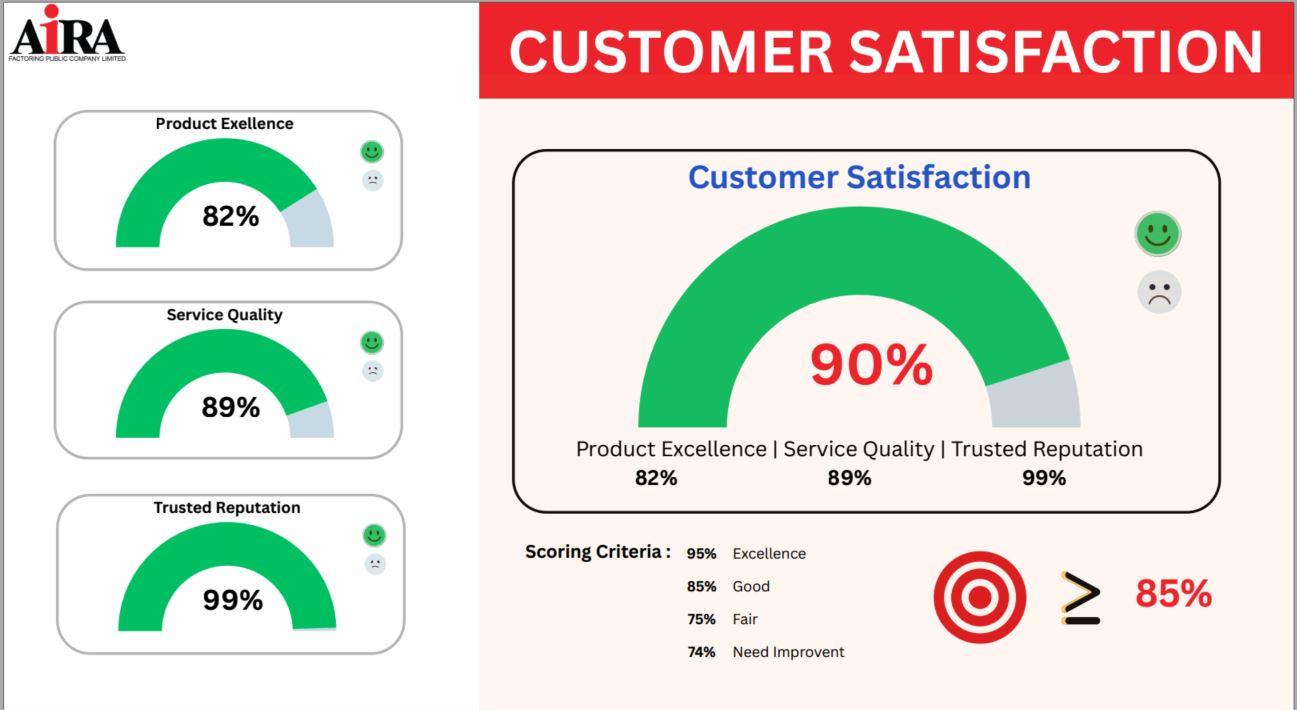
2. Enhancing Customer Experience
The Company leverages digital technology to enhance its services, including:
Online loan application and service status tracking systems
Development of paperless documentation systems
Expanding communication channels for customers to contact Company representatives
These initiatives aim to improve convenience, efficiency, and clarity in service delivery.
3. Complaint Management
The Company has established clear channels for receiving customer complaints, along with a monitoring and resolution process that ensures fair and prompt handling of issues.
In 2025:
No complaints were received from customers regarding the Company’s products or services.
4. Transparent Communication and Personal Data Protection
The Company provides customers with clear, accurate, and comprehensive information regarding products, financial conditions, and service fees. Operations are conducted in compliance with the Personal Data Protection Act (PDPA).
In 2025:
No significant personal data breach incidents were reported.
No complaints were received regarding personal data violations.
Has Performance Results
Yes
Performance Description
Outcomes of Customer Relationship Management
The Company’s customer relationship management initiatives have resulted in the following outcomes:
Customer satisfaction levels exceeded the Company’s established targets
No significant complaints or disputes were reported
Customers experienced services that are convenient, efficient, and transparent
Customer confidence and trust in the Company have continued to strengthen
These outcomes contribute to strengthening long-term relationships with customers, reducing the risk of disputes, and supporting continued service utilization. This, in turn, serves as an important factor in enhancing the stability and sustainable growth of the Company’s factoring business over the long term.
Community & Social — Plan & Guidelines
Has a Community & Social Plan
Yes
Plan Description
Employment and Professional Skills Development Plan
Objectives of the Plan
To enhance employees’ skills and capabilities to perform their duties effectively and adapt to changes in the industry.
To promote equal employment opportunities by valuing diversity in gender, age, and capabilities.
To encourage continuous learning and development to support employees’ career growth.
1. Employment and Professional Skills Development Plan
Approaches and Activities
rganize internal training and continuous knowledge-sharing activities within the organization.
Support training programs in digital skills, factoring business, risk management, and corporate governance.
Provide opportunities for students to participate in internships or study visits to prepare them for the labor market.
Activities Implemented
Employee Skills Development Program
Conduct internal training programs within the organization.
Encourage employees to participate in external training programs relevant to their job functions.
Accept interns to help prepare students for entry into the labor market.
Fair Employment and Diversity Support
Encourage employee participation in expressing opinions and contributing to organizational decision-making.
Expected Outcomes
Employees acquire relevant skills that can be effectively applied to their work.
Strengthen employee engagement and support the long-term growth of the organization.
Employee turnover rate decreases compared to the previous year.
2. Education Development Plan
Approaches and Activities
rganize open-house programs to welcome senior high school students for study visits and career guidance.
Support educational activities such as Children’s Day, Teacher Appreciation Day, and school-related programs.
Provide knowledge on essential skills in the digital era and financial business.
Expected Outcomes
Youth gain inspiration and useful information for planning their education and career paths.
Increased opportunities for access to knowledge and career-oriented learning.
3. Occupational Health, Safety, Well-being, and Quality of Life Plan
Approaches and Activities
Implement the Zero Accident initiative to reduce workplace accidents.
Conduct regular emergency evacuation and fire prevention drills.
Promote awareness of occupational health and workplace safety.
Support annual health check-ups and activities that promote employees’ physical and mental well-being.
Implement flexible working policies (Flexitime / Work From Anywhere in accordance with Company guidelines) to promote work-life balance.
Encourage employee participation in community development activities related to health and safety.
Activities Implemented
Zero Accident Program
Conduct emergency evacuation and fire drills at least once per year.
Support community development initiatives related to occupational health and safety.
Employee Health Promotion Program
Provide free annual health check-up programs for employees.
Support physical activities such as weekly football sports activities.
Employee Quality of Life Development Program
Flexible Working Arrangements
Implement a flexitime policy allowing employees to choose their working hours within two time slots: 08.30 – 17.00 and 08.00 – 16.30.
Allow employees to work remotely (Work From Anywhere) when necessary to care for family members such as parents, children, or spouses with health-related needs or medical appointments.
Improvement of Working Environment
Relocate office premises to provide a more spacious and comfortable working environment.
Provide meeting rooms of various sizes to facilitate collaborative work.
Relationship Building and Skills Development Activities
Conduct monthly knowledge-sharing sessions to enable employees to develop knowledge and skills collaboratively.
rganize recreational and team-building activities to strengthen relationships among employees.
Community Health and Safety Support Program
Encourage employees to participate in community development activities related to occupational health, safety, and public health, such as donating supplies to schools.
Support public health and safety initiatives beneficial to society, such as financial donations to healthcare institutions.
Expected Outcomes
Employees achieve improved physical and mental well-being and greater job satisfaction.
Reduced risk of workplace accidents and injuries.
Improved work-life balance for employees.
The organization contributes to promoting health and safety within the community and society as a whole.
4. Support Plan for Disadvantaged and Vulnerable Groups
Approaches and Activities
The Company aims to support disadvantaged groups facing physical or economic limitations that may affect their access to education, career development, and quality of life. This is carried out through collaboration with organizations and institutions working to enhance the capabilities and self-reliance of such groups.
Key Approaches
Support organizations working with persons with disabilities.
Provide scholarships for underprivileged children and youth.
Promote opportunities for skills development and continuous education.
Activities Implemented
Support for the Visually Impaired
The Company supported the project “Mahakusol Charity Robe Offering to Support the Blind Nationwide for Education and Employment” organized by the Thailand Association of the Blind to promote education, skills development, and career opportunities for visually impaired persons.
Scholarship Support for Underprivileged Students
The Company supported the Teacher Appreciation Day activity for the academic year 2025 at Ban Phai Lom Samakkhi School, Chanthaburi Province, by providing scholarships to students with good conduct and academic performance who face financial constraints.
Expected Outcomes
Disadvantaged groups receive appropriate support and opportunities to improve their quality of life.
5. Social Inequality Reduction Plan
Approaches and Activities
Participate in financial fairs or events to provide financial consultation and knowledge.
Promote financial literacy and access to financing for SME entrepreneurs.
Expected Outcomes
People and entrepreneurs gain greater knowledge and improved access to financial services.
Contribute to reducing economic inequality in society.
6. Other Initiatives: Crisis Relief and Social Assistance
Approaches and Activities
Support relief initiatives for disaster-affected communities through credible organizations or network partners.
Provide assistance through the Company’s budget approval and governance process.
Expected Outcomes
Disaster-affected communities receive timely and appropriate assistance.
The Company contributes responsibly to supporting society during times of crisis.
Plan Areas
| Plan Area | Other — Please Specify |
|---|---|
| Employment and professional skill development | |
| Education | |
| Occupational health, safety, health, and quality of life | |
| Disadvantaged and vulnerable groups | |
| Reducing inequality and promoting social equality | |
| Others | Social Assistance During Crisis Situations |
Community & Social — Targets
Introduction
1. Employment and Professional Skills Development Objectives
Enhance employees’ skills and capabilities to prepare them for changes in business, technology, and future working models.
Promote fair employment practices and provide opportunities for employees to grow and advance in their careers.
Support lifelong learning and knowledge sharing within the organization.
2. Education Development Objectives
Promote educational opportunities and learning for youth.
Connect learning with the world of work to help build an understanding of future career paths.
3. Occupational Health, Safety, Well-being, and Quality of Life Objectives
Create a safe working environment and reduce risks related to workplace accidents and employee health.
Promote physical and mental well-being and enhance quality of life to support effective work performance.
Extend health and well-being initiatives from employees to communities and society.
Encourage employee participation in social initiatives related to health and safety.
4. Objectives for Supporting Disadvantaged and Vulnerable Groups
Support the improvement of quality of life and opportunities for disadvantaged groups in society.
5. Social Inequality Reduction Objectives
Increase equitable access to knowledge and financial services.
Support entrepreneurs and the public in making informed financial decisions.
6. Objectives for Social Assistance During Crisis Situations
Provide relief and support to people affected by disasters or emergency situations.
Has Set Community & Social Targets
Yes
Targets
| Indicator | Target Areas | Base Year | Target Year | Target Year — Description |
|---|---|---|---|---|
| Number and Continuity of Learning and Knowledge-Sharing Activities | 3036 · Description: Employment and professional skill development | 2,025 | 2,025 | 12 sessions |
| Participation in and Support for Educational Activities | 3037 · Description: Education | 2,025 | 2,025 | At least 1 activity |
| Annual Health Check-up | 3041 · Description: Occupational health, safety, health, and quality of life | 2,025 | 2,025 | More than 90% of employees received annual health check-ups. |
| Support for Organizations or Foundations Assisting Persons with Disabilities and Vulnerable Groups | 3042 · Description: Disadvantaged and vulnerable groups | 2,025 | 2,025 | At least 1 activity |
| Participation in Financial Advisory and Financial Literacy Activities | 3044 · Description: Reducing inequality | 2,025 | 2,025 | Participated in activities to promote financial knowledge and financial products at least once. |
| Providing assistance through credible organizations and partner networks | 3045 · Other name: Social Assistance During Crisis Situations · Description: Others | 2,025 | 2,025 | At least 1 activity |
Community & Social — Performance & Outcomes
Has Performance Results
Yes
Performance Description
In 2025, AIRA Factoring Public Company Limited implemented community and social management in a systematic manner under its sustainability framework. The Company aims to create shared value for employees, communities, society, and relevant stakeholders through initiatives in human resource development, education, health and safety, support for disadvantaged groups, reduction of social inequality, and assistance during crisis situations.
The operational performance and outcomes are summarized as follows:
1. Performance in Employment and Professional Skills Development
The Company places importance on continuously developing employees’ capabilities in order to enhance readiness for changes in business, technology, and future working models. In 2025, the Company regularly organized internal training and knowledge-sharing activities covering key competencies required for work, including knowledge related to financial and factoring businesses, risk management, corporate governance, digital technology, environmental issues, and sustainability.
Key activities included training programs on communication and workplace skills, digital skill development such as the use of internal tools and systems, training on business ethics, conflicts of interest, and the use of inside information, as well as awareness-building on ESG topics such as Green Solutions and Carbon Footprint for Organization (CFO).
In addition, the Company provided opportunities for students to participate in internships or study visits in order to prepare them for entry into the labor market and to promote experiential learning through real-world work experience.
Outcomes
Employees gained skills and knowledge that can be effectively applied in their work.
A culture of learning and continuous human resource development was fostered within the organization.
Supported employees’ career growth and long-term engagement with the Company.
2. Performance in Education and Youth Development
The Company continuously supports educational initiatives to promote learning opportunities and youth development. In 2025, the Company supported Children’s Day activities, Teacher Appreciation Day events, and scholarship programs for educational institutions in provincial areas, aiming to assist students with limited financial resources and promote equal access to education.
In addition, the Company organized the activity “AF Open House for Grade 12 Students: Inspiring Careers in the Digital Era”, welcoming senior high school students from Rajini School to participate in study visits and career guidance activities. The program provided insights into career paths, essential skills for the digital era, and the role of financial businesses and financial technology (FinTech).
Outcomes
Youth received inspiration and useful information for planning their education and career paths.
Strengthened the connection between the education sector and the working world.
Increased access to knowledge in business and financial technology.
3. Performance in Occupational Health, Safety, Well-being, and Quality of Life
The Company prioritizes employees’ well-being and quality of life through the implementation of the Zero Accident program, regular emergency evacuation and fire prevention drills, communication and awareness-building on occupational health and safety, annual health check-ups, and activities that promote employees’ physical and mental well-being.
The Company also introduced flexible working policies, including Flexitime and Work From Anywhere (in accordance with Company guidelines), to support work-life balance and enhance employee productivity.
From a broader social perspective, the Company also supported public health initiatives by donating funds to medical foundations to assist in the procurement of medical equipment and support the operations of healthcare institutions.
Outcomes
Employees experienced improved physical and mental well-being and greater job satisfaction.
Reduced risks related to workplace accidents and health issues.
Communities and society received appropriate support in public health.
4. Performance in Supporting Disadvantaged and Vulnerable Groups
The Company supported organizations and foundations working with persons with disabilities and vulnerable groups, particularly initiatives supporting visually impaired individuals. This was achieved through charitable donations and participation in public benefit activities aimed at promoting education, vocational training, and self-reliance for target groups.
Outcomes
Disadvantaged groups received support and opportunities to improve their quality of life.
Strengthened the Company’s role in promoting an inclusive society that leaves no one behind.
5. Performance in Reducing Social Inequality
The Company participated in financial fairs and related events to provide responsible financial advisory services and knowledge sharing. These activities focused on promoting financial literacy and improving access to financing for SME entrepreneurs in a transparent and responsible manner.
Outcomes
Members of the public and entrepreneurs gained improved financial knowledge and understanding.
Supported access to financial services and contributed to reducing economic inequality.
6. Performance in Providing Social Assistance During Crisis Situations
In 2025, the Company supported relief initiatives for flood victims in several areas through collaboration with credible organizations and partner networks, including the Thai Red Cross Society and chambers of commerce networks. All activities were conducted in accordance with the Company’s transparent budget approval and governance processes.
In addition to flood relief assistance, the Company also emphasized humanitarian and national security support in response to unrest in the Thailand–Cambodia border area, which affected frontline military operations and the livelihoods of local communities.
The Company approved financial contributions to support frontline soldiers and affected communities along the Thailand–Cambodia border through the Panit Songkhro Foundation, under the coordination of the Thai Chamber of Commerce and the Board of Trade of Thailand, to assist in providing essential supplies and urgent humanitarian aid.
This support aimed to alleviate hardship, boost morale among frontline personnel, and assist communities affected by the unrest. All activities were conducted under the Company’s official CSR budget approval process and supported by verifiable documentation.
Outcomes
Provided timely and appropriate assistance to frontline personnel and border communities.
Strengthened morale among officers performing duties in high-risk areas.
Demonstrated the Company’s role in supporting society and the nation during times of crisis in accordance with good governance and social responsibility principles.
Summary Table of Community and Social Management Performance (2025)
Dimension / Issue | Key Programs / Activities | Target Groups / Stakeholders | Output | Outcome (CGR-safe) |
|---|---|---|---|---|
Employment and Professional Skills Development | Knowledge sharing, digital skills training, factoring business, risk management, governance training, internship programs | Employees / Students | Continuous training and knowledge-sharing activities | Employees develop relevant skills, fostering a learning culture and long-term growth |
Education and Youth Development | AF Open House for Rajini School students, Children’s Day, Teacher Appreciation Day, educational support | Students / Educational institutions | Study visits and educational support activities | Youth gain inspiration and career planning insights |
Occupational Health, Safety, Well-being | Zero Accident program, evacuation drills, annual health check-ups, Flexitime & WFA, public health support | Employees / Communities / Healthcare institutions | Implementation of OHS measures and health promotion activities | Improved employee well-being and reduced workplace risks |
Support for Disadvantaged Groups | Charity initiatives supporting the visually impaired, support for disability foundations | Visually impaired persons / Charitable organizations | Financial support to relevant organizations | Enhanced opportunities for education, vocational training, and self-reliance |
Social Inequality Reduction | Financial literacy initiatives, financial fairs, SME advisory | Public / SMEs | Responsible financial advisory and knowledge sharing | Increased access to financial services and reduced economic inequality |
Crisis Relief Assistance | Flood relief programs through Thai Red Cross and chamber networks | Disaster-affected communities | Donations and relief activities | Timely assistance for affected communities |
Crisis Relief (Humanitarian / Security) | Support for frontline soldiers and communities along the Thailand–Cambodia border through Panit Songkhro Foundation | Frontline personnel / Border communities | Approved financial contributions through credible partners | Alleviated hardship, boosted morale, and reflected the Company’s responsible role during crises |
Other Social Management
Introduction
In addition to the Company’s core community and social initiatives, the Company also places importance on other social dimensions related to responsible business practices, stakeholder engagement, and the cultivation of an organizational culture that supports sustainable development. The Company focuses on integrating social considerations into its operational processes, communication, and business decision-making in an appropriate and consistent manner.
Plan & Outcomes — Description
In 2025, the Company implemented additional social management initiatives alongside its regular business operations to promote responsible, transparent, and fair practices toward stakeholders at all levels. These initiatives include the following:
Promotion of Business Ethics and Good Corporate Governance
The Company continuously provides training and communication on business ethics guidelines, anti-corruption policies, conflict of interest prevention, and the appropriate use of inside information for employees. These activities aim to enhance employees’ knowledge, understanding, and awareness in performing their duties in accordance with good governance principles.
In addition, the Company regularly monitors and reports the implementation of its anti-corruption policy to management and relevant committees on a quarterly basis. In 2025, no cases of fraud or corruption were identified, and no whistleblowing reports related to such matters were received through the Company’s complaint channels.
Protection of Personal Data of Customers, Business Partners, and Employees
The Company strictly complies with the Personal Data Protection Act (PDPA) and has established data security measures to safeguard personal information. The Company also conducts awareness training for employees on the proper management and use of personal data.
Enhancing Employee Awareness and Participation in Social Issues
The Company encourages employee participation through internal communication activities, knowledge-sharing sessions, and opportunities for employees to propose ideas to improve work processes and the working environment on an ongoing basis.
Management of Complaints and Stakeholder Feedback
The Company provides appropriate, transparent, and verifiable channels for receiving complaints and feedback from stakeholders. A systematic process is in place to monitor and report the resolution of such matters to ensure fairness and maintain stakeholder confidence.
Outcomes of Other Social Management Initiatives
Through these efforts, the Company has achieved several positive social outcomes, including:
Employees have greater awareness and understanding of ethical responsibilities and social accountability.
Stakeholders have increased confidence in the Company’s transparency, fairness, and protection of personal rights.
A working environment that encourages participation, open dialogue, and continuous improvement has been fostered.
The Company supports sustainable business operations by reducing social and reputational risks in the long term.
Law Violation Incidents
Introduction
In 2025, AIRA Factoring Public Company Limited had no cases under investigation by competent authorities and were not subject to any allegations or disputes related to violations of social or human rights laws or regulations that could materially affect the Company’s business operations, image, reputation, or assets. In addition, there were no publicly reported cases concerning such matters.
The Company places importance on conducting its business with social responsibility and strictly complies with applicable laws, rules, and regulations. The Company has established policies and practices relating to human rights, fair labor practices, non-discrimination, and appropriate protection of stakeholders. In addition, the Company provides complaint channels and internal control mechanisms to prevent and mitigate social and human rights risks.
Labor Disputes
Over the past three years, the Company has had no significant labor disputes and no conflicts that have affected its business operations.
The Company promotes positive relationships between management and employees through open communication, listening to employee feedback, and ensuring compliance with labor rights and welfare in accordance with applicable laws.
The Company does not have a labor union and continues to manage labor relations based on fairness, mutual respect, and employee participation in the continuous development of the organization.
Law Violation Incidents
| Metric | Current Year | Previous Year | Two Years Ago |
|---|---|---|---|
| The total number of cases or incidents of significant violations of laws or regulations regarding social and human rights (Cases) | 0 | 0 | 0 |
| The total number of cases or incidents that cause significant labor disputes (Cases) | 0 | 0 | 0 |
| The total number of cases or complaints related to consumer rights violations (Cases) | 0 | 0 | 0 |
| The total number of cases or complaints related to partner rights violations (Cases) | 0 | 0 | 0 |
| The total number of cases or incidents that cause disputes with the community/society (Cases) | 0 | 0 | 0 |
| The total number of cases or incidents related to cyber security or customer data breaches (Cases) | 0 | 0 | 0 |
| The total number of cases or incidents related to safety and occupational health at work (Cases) | 0 | 0 | 0 |